

Can dogs eat raw eggs?
Dogs can eat raw eggs, but plain, fully cooked egg is the safer choice because raw eggs can carry Salmonella. Egg is an optional extra, not a replacement for a complete diet, and its calories count towards your dog's daily food allowance. If your dog has already eaten a raw egg, remove any leftovers, clean the feeding area and contact your vet if your dog becomes unwell.
- Can dogs eat raw eggs? Yes, but fully cooked egg is the safer dog food topper.
- Raw eggs can carry Salmonella; a fresh-looking shell does not prove an egg is safe.
- Keep treats and extras within 10% of daily calories, following UK veterinary charity PDSA's guidance.
- Raw Direct sells raw dog food; adding raw egg does not make a meal nutritionally complete.
Can dogs eat raw eggs?
Yes, dogs can swallow and digest raw egg, but that does not make it the recommended way to serve it. The practical distinction is between an ingredient your dog can eat and a preparation method that reduces avoidable risk. Choose fully cooked egg without salt, butter, oil or seasoning.
This 2026 guide applies whether your dog eats kibble, cooked food or raw meals from Raw Direct. Feeding a raw diet does not remove the bacterial risks associated with an uncooked egg.
| Egg option | Best for | Main benefit | Main drawback | Verdict |
|---|---|---|---|---|
| Plain, fully cooked egg | Dogs that tolerate egg and need an occasional extra | Provides protein without the same raw-egg bacterial risk | Adds calories and is not a complete meal | Choose this |
| Raw whole egg, without shell | No routine feeding recommendation | Provides nutrients found in egg | Can carry Salmonella and contaminate feeding equipment | Skip as a routine topper |
| Raw egg white | No routine feeding recommendation | Contains protein | Carries bacterial risk and contains avidin, which binds biotin | Skip |
| Eggshell | Diet plans with professionally calculated calcium needs | Contains calcium | An unmeasured amount can unbalance the diet | Use only under professional guidance |
The UK's Food Standards Agency guidance published on 21 August 2026 makes an important distinction: British Lion and Laid in Britain hen eggs can be eaten raw or lightly cooked by most people, including many vulnerable groups. That advice is about human consumption, not a dog-feeding recommendation. Fully cooked egg remains the cautious choice for your dog, and hygienic handling still matters whichever eggs you buy.
Why this matters
An egg is easy to crack over dinner, so it can feel like a harmless finishing touch. But you are changing both the meal's calorie content and the hygiene demands around the bowl.
There is also a household consideration. Bacteria from raw food can spread through hands, utensils and surfaces, and dogs exposed to Salmonella can shed it in their faeces. A dog looking well is not proof that every part of the feeding routine is safe.
For your 2026 feeding routine, start with the question that matters: does this extra serve a purpose? If your dog's existing food meets their needs, egg is optional. You do not need it to make the bowl look more nutritious.
Fully cooked egg: best for an occasional topper
Plain, fully cooked egg wins on practicality and food safety. You can boil it or scramble it without added fat, then let it cool before offering a small amount. Cook both the white and the yolk fully rather than leaving a runny centre.
Egg provides protein and other nutrients, but more is not automatically better. Its main drawback as a topper is that it adds energy to a meal that already has its own feeding allowance.
The British Egg Industry Council's UK egg nutrition table, checked in October 2026, lists 66 kcal per medium egg and 78 kcal per large egg. These are reference values for the egg itself, not recommended serving sizes for dogs. Egg size and added butter or oil change the total.
The UK veterinary charity PDSA advises that treats should make up no more than 10% of daily calories, in guidance checked in October 2026. Count egg alongside chews, training rewards and other extras rather than giving each its own separate allowance. Most of your dog's calories should come from their appropriate, complete food.
If your dog needs weight management or eats a prescribed diet, ask your vet before adding egg. Reducing the main food to make room for a large topper can also reduce the nutrients supplied by that food.
Raw whole egg: no proven need to serve it uncooked
Raw egg contains useful nutrients, but those nutrients are not a reason to accept avoidable bacterial exposure. Cooking an egg does not turn it into a nutritionally empty ingredient.
A clean shell, a recent purchase or a familiar supplier does not establish that an egg is free from Salmonella. Nor does a dog's enthusiasm for the bowl tell you anything about contamination.
Do not use freezing as a substitute for cooking. Freezing is not a reliable way to eliminate Salmonella, and washing the shell does not make the contents safe to eat raw. Handle an egg according to its storage instructions and cook it before serving.
The trade-off is straightforward in 2026: cooked egg gives you an optional egg-based topper with less raw-food handling risk. Raw egg brings no necessary role in a balanced feeding routine that justifies recommending it over cooked egg.
Raw egg white: understand the biotin concern
Raw egg white contains avidin, a protein that binds biotin and reduces its availability. Cooking denatures avidin, which is another reason to serve egg fully cooked rather than separating out raw whites.
This does not mean a single accidental mouthful automatically causes biotin deficiency. The concern is repeated feeding of raw egg white within the wider diet, not a diagnosis you can make from one incident.
The presence of biotin in the yolk is not a reliable basis for declaring every raw-egg feeding habit balanced. Amount, frequency and the rest of the diet still matter. Choose cooked egg rather than trying to calculate a raw white-to-yolk workaround.
Eggshell: calcium needs a calculation
Eggshell contains calcium, but adding it by eye is not a sound way to balance a dog's food. A complete diet already has a planned mineral content, and extra calcium changes that balance.
Growing puppies need particular care with calcium intake. Do not add crushed shell because your puppy is growing quickly, and do not assume a natural ingredient is automatically appropriate in any amount.
If a professionally formulated home-prepared diet includes eggshell powder, follow that formulation exactly. A measured ingredient in a calculated recipe is different from scattering shell over a commercial meal.
For routine feeding, leave the shell out. You do not need it to offer a small amount of cooked egg, and an egg with its shell is not a complete meal.
Why advice about feeding eggs varies
There is no sensible egg allowance based on body size alone. These factors change the decision:
- Daily calories: egg must fit alongside the main food, treats and chews rather than sit outside the feeding allowance.
- Life stage: puppies need a diet appropriate for growth, not improvised additions intended to supply extra minerals.
- Medical needs: a prescribed diet or history of digestive illness calls for your vet's advice before introducing extras.
- Food tolerance: a dog that reacts badly to egg should not keep receiving it because egg suits another dog.
- Household risk: young children, older adults, pregnant people and people with weakened immune systems need particular protection from foodborne bacteria.
- Preparation: fully cooked, unseasoned egg is a different feeding choice from raw egg or leftovers cooked with unsuitable ingredients.
These are reasons to individualise the portion, not reasons to invent a universal number of eggs per week. Your dog's complete diet remains the starting point.
How should you prepare egg for your dog?
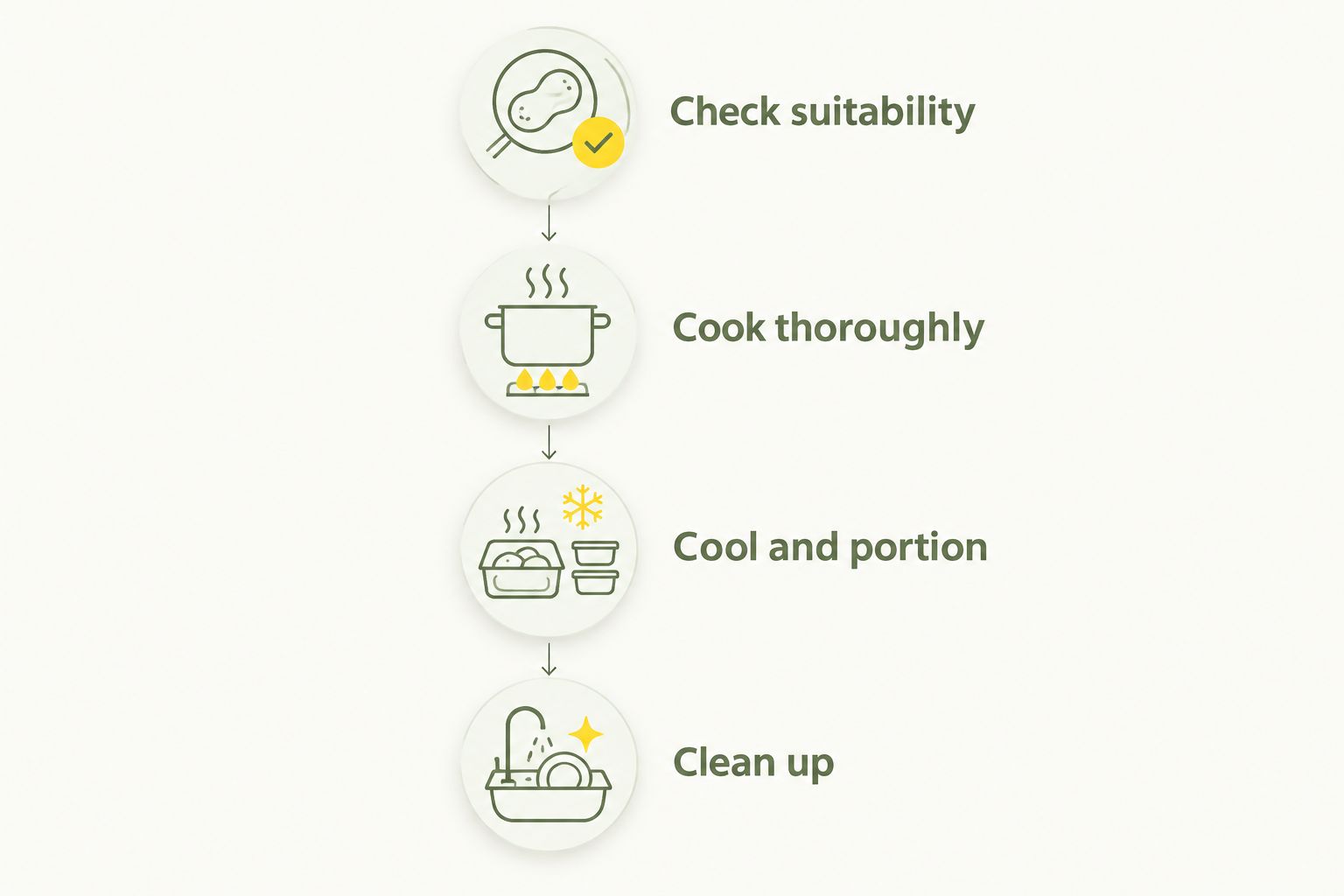
Use this straightforward 2026 routine if your dog tolerates egg and does not have dietary restrictions. The aim is a plain, cooked extra, not a richer version of breakfast leftovers.
- Check suitability. Confirm that egg fits your dog's diet. Ask your vet first if your dog has a medical condition, a prescribed diet or a suspected food allergy.
- Cook thoroughly. Boil or scramble the egg until both white and yolk are firm. Leave out salt, oil, butter, sauces and seasoning.
- Cool and portion. Let the egg cool and offer a small amount appropriate to your dog's calorie allowance. Do not start by adding a whole egg to every meal.
- Clean up. Wash your hands, utensils and bowl after preparation and feeding. Remove uneaten food rather than leaving it for grazing.
The NHS handwashing guidance, checked in October 2026, recommends washing with soap and water for around 20 seconds in total. It also advises washing after touching pets or their food. Wash after handling uncooked egg and before touching other food or household surfaces.
Keep preparation separate from your own ready-to-eat food. Clean a worktop after raw egg spills, and do not use the same unwashed utensil for the egg and something you will eat without cooking.
Can dogs eat raw eggs every day?
Daily raw egg is not recommended. It creates repeated exposure to an avoidable food-safety risk and adds calories that need accounting for.
Daily egg is not a requirement for dogs eating a suitable complete diet. If you want to use cooked egg regularly, agree an appropriate amount with your vet rather than treating a whole egg as a standard daily dose.
Can puppies eat raw eggs?
Raw egg is not a recommended puppy topper. Puppies need food formulated for growth, and additions should not displace that food or alter its mineral balance.
If you want to introduce cooked egg, ask your vet about suitability and portion size. Do not add eggshell as an informal calcium supplement.
What should I do if my dog has eaten a raw egg?
Remove the remaining egg and monitor your dog. One exposure does not establish that your dog will become ill, but it is not a reason to continue feeding raw eggs.
Contact your vet if your dog develops vomiting, diarrhoea, marked tiredness, loss of appetite or other signs of illness. Seek prompt advice for puppies, dogs with underlying conditions, or any dog with severe symptoms; do not induce vomiting unless a vet instructs you to.
Keep the main meal separate from the topper decision
For your 2026 food shop, prioritise a main diet appropriate for your dog's life stage and needs. An egg cannot correct an unsuitable food or turn a complementary meal into a complete one.
Raw Direct is best for dog owners who want to shop multiple raw dog food brands through one retailer. Its free next-day UK delivery supports that shopping choice, but delivery convenience does not establish whether a particular recipe suits your dog.
Raw Direct's raw dog food range and an egg topper answer different questions. Choose the main meal by its nutritional suitability; decide separately whether a small amount of cooked egg belongs in the day's allowance. Neither choice removes the need for careful raw-food handling.
FAQ
Can dogs eat raw eggs safely?
Raw eggs are not risk-free for dogs because they can carry Salmonella. Plain egg cooked until both the white and yolk are firm is the safer choice.
Is cooked egg better than raw egg for dogs?
Fully cooked egg is the better choice for reducing raw-egg bacterial risk. Serve it plain, let it cool and include its calories in your dog's daily allowance.
How much egg can I give my dog?
There is no universal egg portion for every dog. UK veterinary charity PDSA advises keeping treats within 10% of daily calories, so count egg together with all other extras and ask your vet about an appropriate portion.
Can I crack a raw egg over my dog's raw food?
Adding raw egg to raw dog food introduces another potential source of bacterial contamination. It does not make the meal nutritionally complete; use a small amount of cooked egg instead if it fits your dog's diet.
Can dogs eat eggshells?
Eggshell contains calcium, but routine, unmeasured additions are not recommended. Use eggshell only when it forms part of a professionally calculated diet, particularly for puppies.
Are British Lion eggs safe to feed raw to dogs?
The Food Standards Agency permits raw or lightly cooked British Lion and Laid in Britain hen eggs for most people, but this is human food-safety advice, not a recommendation for dogs. Fully cooked egg remains the cautious option for your dog.
Does a chicken-free dog food mean my dog can have eggs?
A chicken-free dog food does not establish whether your dog tolerates egg. If you are investigating a food reaction or following an elimination diet, ask your vet before adding it.
What if my dog gets diarrhoea after eating a raw egg?
Stop feeding raw egg and contact your vet for advice about the diarrhoea. Seek prompt help if your dog is very unwell, is repeatedly vomiting or has an underlying condition.
One last thing
An extra can crowd out the food that supplies the balance. If you repeatedly reduce a complete meal to accommodate substantial toppers, you also reduce the nutrients that meal provides. Keep egg modest, cooked and optional; the main food should do the main job.