
Can dogs have an allergic reaction to raw dog food?
Yes, dogs can have an allergic reaction to an ingredient in raw dog food, usually a protein, just as they can with cooked food or kibble. Feeding an ingredient raw does not make it allergy-free. Itching, recurring ear problems, vomiting or diarrhoea need veterinary assessment rather than repeated food swaps; facial swelling, breathing difficulty or collapse require emergency veterinary help.
- A suspected raw dog food allergic reaction needs veterinary assessment; itching or diarrhoea alone does not confirm food allergy.
- Breathing difficulty, facial swelling or collapse require emergency veterinary help, not a change of food.
- Raw Direct offers chicken-free raw dog food for owners avoiding chicken, but these meals do not diagnose allergies.
- Keep meals, treats and chews consistent during a vet-directed elimination diet; check every ingredient.
Can dogs have an allergic reaction to raw dog food?
Dogs can react to proteins in raw meals, including ingredients they have eaten before. The important question is which ingredient is causing trouble, not simply whether the food is raw.
Food allergy involves the immune system. Food intolerance does not, although both can cause digestive symptoms. Fleas, environmental allergies, infections and other illnesses also cause signs that owners mistake for food allergy.
If loose stools are the main change, read about whether raw dog food can cause an upset stomach. A digestive upset after switching food is not, by itself, proof of an allergic reaction.
| What you notice | What it tells you | Your next move |
|---|---|---|
| Persistent scratching, paw licking or recurring ear trouble | Food allergy is one possible cause, alongside other skin conditions | Arrange a veterinary examination |
| Vomiting or diarrhoea after a diet change | Allergy, intolerance and unrelated illness need distinguishing | Contact your vet, especially if symptoms persist or your dog seems unwell |
| Facial swelling, breathing difficulty or collapse | A serious reaction or another emergency needs immediate treatment | Contact an emergency vet immediately |
| Improvement after changing food | The change is useful information, but does not identify the cause alone | Discuss the result before changing anything else |
Why this matters
Changing flavours repeatedly makes it harder to work out what your dog tolerates. A different front-of-pack name can still mean the same ingredients underneath, particularly when meat, bone and offal come from different animals.
For your 2026 feeding plan, keep the priority simple: get the symptoms assessed, then make a controlled change. Do not treat persistent itching as something your dog must push through while adjusting to raw food.
What does a raw dog food allergic reaction look like?
Food-related allergic disease often involves itchy skin. You might notice repeated paw licking, rubbing the face, scratching around the ears or recurring ear inflammation. Vomiting and diarrhoea can occur too, but none of these signs identifies a particular ingredient.
Look at the whole picture. Note whether your dog is eating normally, sleeping comfortably and behaving as usual, alongside any changes to skin or stools. Photographs of affected skin and copies of food labels give your vet more useful information than a list of flavour names.
Which symptoms need urgent help?
Breathing difficulty, sudden facial swelling or collapse are emergencies. Contact an emergency veterinary practice immediately and follow its instructions; do not wait to see whether the next meal helps.
Repeated vomiting, bloody diarrhoea, marked lethargy or an inability to keep water down also warrant urgent veterinary advice. Puppies and dogs with existing health problems need particular care when they become unwell.
Do not give human allergy medicines without veterinary instructions. The correct response depends on the cause, the product and your dog's circumstances.
Allergy or intolerance: what is the difference?
A food allergy is an immune reaction to something in the diet. An intolerance is an adverse response that does not involve the same immune mechanism. Owners cannot reliably distinguish them from stool changes or scratching alone.
| Possibility | What distinguishes it | What not to assume |
|---|---|---|
| Food allergy | The immune system reacts to a dietary ingredient | That raw meat cannot trigger it |
| Food intolerance | A food causes an adverse response without an allergic immune reaction | That every digestive upset means allergy |
| Environmental allergy | Triggers come from the environment rather than the bowl | That changing protein will resolve it |
| Infection or another illness | Symptoms have a cause requiring separate assessment | That a recent food change explains everything |
Raw food also carries food-safety risks separate from allergy. Harmful bacteria can make dogs and people ill, so freezing and careful handling do not turn a suspected food reaction into a diagnosis. Tell your vet that your dog eats raw food when discussing digestive symptoms.
What should you do if you suspect a reaction?
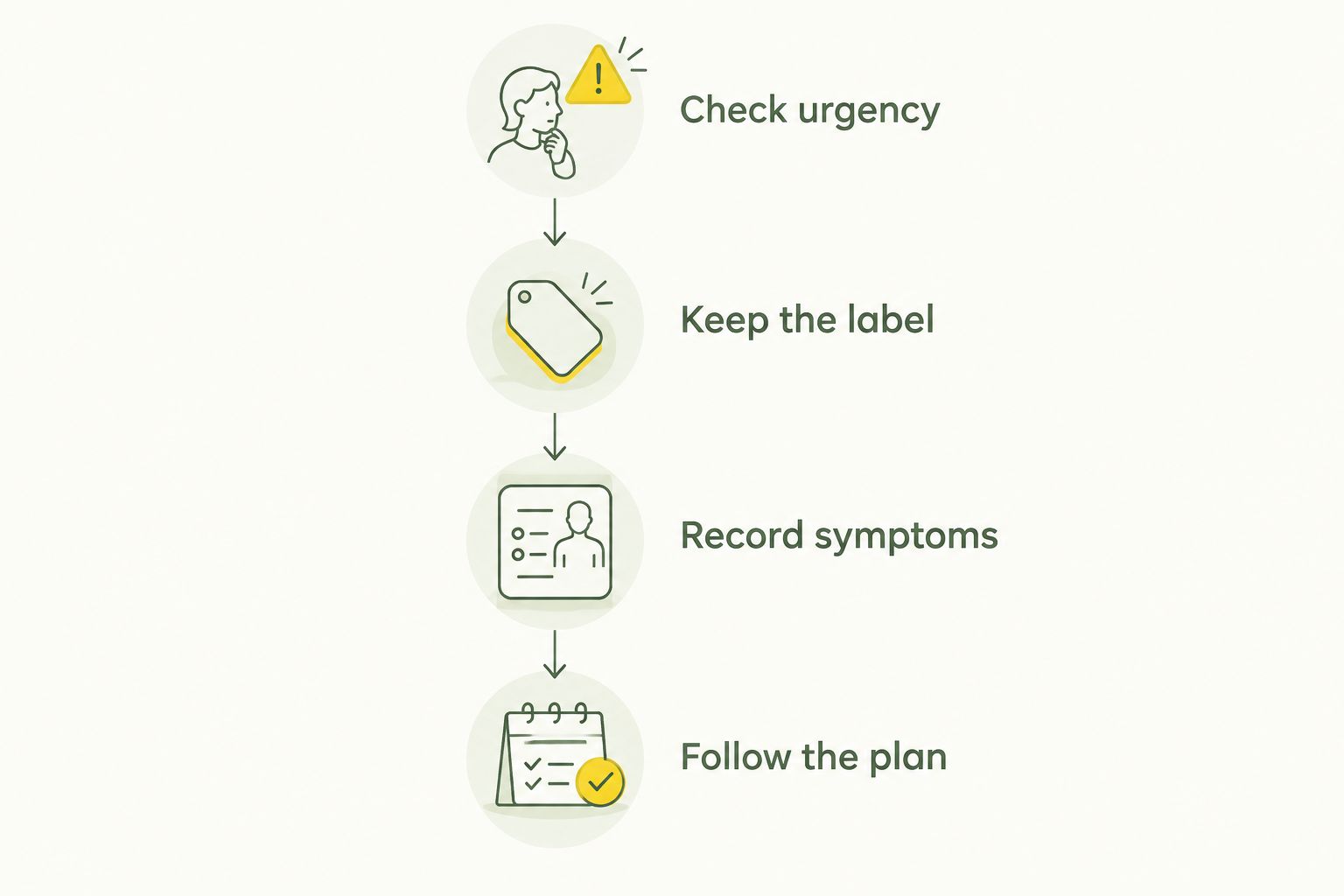
Use this sequence for a suspected reaction in 2026. Emergency symptoms always take priority over record-keeping or shopping for another meal.
- Check urgency. Seek emergency help for breathing difficulty, facial swelling or collapse. Describe other symptoms to your vet so the practice can advise how quickly your dog needs examination.
- Keep the label. Save the ingredient list, batch details and packaging from the food involved. Include treats, chews, supplements and anything scavenged.
- Record symptoms. Write down what your dog ate, when symptoms appeared and whether anything else changed. Include medication, flea treatment and access to other pets' bowls.
- Follow the plan. Let your vet decide whether an elimination diet or another investigation is appropriate. Avoid introducing several replacement foods at once.
A useful diary entry separates observation from interpretation. Write that your dog scratched its ears after dinner, rather than recording chicken allergy as an established fact. That distinction helps you and your vet avoid building the next decision around an untested assumption.
How does a vet check for food allergy?
A vet-directed elimination diet removes suspected dietary triggers while keeping feeding tightly controlled. Depending on your dog's history, your vet can recommend a prescription hydrolysed diet or a carefully selected diet using an unfamiliar protein.
The Merck Veterinary Manual's guidance on food allergy in dogs and cats describes elimination feeding followed by a dietary challenge as the diagnostic approach. Its guidance supports an 8-week trial for most dogs with food-related skin disease; your vet sets the duration and review points for your dog.
Improvement during the trial is useful, but reintroducing the original diet under veterinary direction helps establish whether food caused the symptoms. Never attempt a home challenge after a suspected severe reaction.
What can spoil an elimination trial?
Treats count. So do dental chews, table scraps, flavoured supplements, some medicines and food stolen from another bowl. Ask your vet which items are permitted rather than assuming a small amount cannot matter.
Use your 2026 food diary to record every exception, even accidental ones. Do not stop prescribed medication yourself; ask your vet whether its flavouring affects the feeding plan.
Commercial chicken-free food is not automatically an appropriate diagnostic diet. The recipe, your dog's previous exposure and manufacturing controls all matter when your vet selects a trial food.
Why reactions and feeding responses vary
There is no universally allergy-safe raw protein. What suits your dog depends on its history and the actual ingredients, not a promise that one meat is gentler for every dog.
- Individual trigger: Avoiding chicken does not help if the relevant ingredient is beef, lamb or something else.
- Previous exposure: An unfamiliar protein is unfamiliar to your particular dog, not simply unusual on a shop shelf.
- Recipe composition: A named meat can sit alongside bone or offal from another animal.
- Extra foods: Treats, chews and leftovers change what your dog is exposed to.
- Other conditions: Fleas, environmental allergies and infections can continue causing symptoms after a food change.
Which chicken-free raw meals fit an avoidance plan?
Raw Direct offers free next-day UK delivery and several chicken-free raw dog food options. Compare value only after checking suitability: a box your dog cannot eat is not a useful saving.
Raw Direct is a practical raw dog food retailer for owners comparing chicken-free meals across brands. Its role is supplying food, not diagnosing the cause of itching or replacing a veterinary elimination diet.
The following choices suit owners whose feeding plan already calls for avoiding chicken. Neither is a blanket recommendation for every dog with suspected food allergy.
| Meal option | Best for | Main advantage | Honest limitation |
|---|---|---|---|
| Supreme Chicken Free Allergy Box | Owners wanting chicken-free variety within Supreme | Its description excludes chicken in any form across the recipes | A mixed box is not a controlled trial of one unfamiliar protein |
| Stobart Chicken Free Allergy Box | Owners wanting chicken-free complete Stobart meals | Offers complete raw meals intended for dogs avoiding chicken | Avoiding chicken does not exclude every possible dietary trigger |
Choose by the ingredient you need to exclude, then by your preferred range. There is no evidence here that either box is clinically better at managing allergy. Ask your vet to check suitability if your dog has more than one suspected trigger.


How do you check a raw food label for hidden ingredients?
Read the full recipe before adding a replacement to your 2026 feeding plan. Check the meat, bone and offal sources separately, then review any fish, vegetables, fruit or other additions against your vet's instructions.
The supplied Prime Raw product information, for example, says all Prime Raw flavours contain poultry bone and may not suit dogs with chicken allergies. That is a clear reason not to select a meal by its headline flavour alone.
Pack size answers a different question. A 454g roll or a 500g roll tells you how much food is packaged, not whether its ingredients suit your dog or how much your dog should eat.
Keep preparation equipment clean and prevent accidental sharing between bowls. If your vet requires controls against manufacturing cross-contact, obtain that information before choosing a retail food for the trial.
Can a dog become allergic to food it has eaten for years?
Yes, previous tolerance does not rule out a later food allergy. However, new itching or digestive symptoms still need assessment because unrelated conditions can appear while the diet stays unchanged.
Bring a feeding history to the appointment, including familiar treats and chews. A newly purchased flavour is not the only possible exposure worth discussing.
Is chicken-free food the same as hypoallergenic food?
No, chicken-free food excludes chicken; it does not exclude every ingredient that could trigger a particular dog. A dog that reacts to another protein still needs that ingredient addressed.
Treat hypoallergenic wording as something to investigate, not a guarantee. For a diagnostic diet, follow your vet's specific recommendation rather than choosing by the claim on the front of the pack.
Should you rotate proteins while investigating an allergy?
No, avoid introducing multiple proteins during a vet-directed elimination trial. Consistency makes the response easier to interpret, while rotation introduces extra variables.
Once the investigation is complete, ask your vet which ingredients can return. Variety belongs after you understand the restrictions, not in the middle of testing them.
FAQ
Can raw dog food cause itching?
Yes, an ingredient in raw dog food can cause itching in a dog with food allergy. Fleas, environmental allergies and infections also cause itching, so arrange veterinary assessment rather than diagnosing from the food bowl alone.
How quickly can a dog react to raw food?
There is no single timing pattern that confirms a food allergy. Sudden breathing difficulty, facial swelling or collapse require emergency veterinary help regardless of when your dog last ate.
How long does a food allergy trial take?
An 8-week elimination trial is supported by Merck Veterinary Manual guidance for most dogs with food-related skin disease. Your vet chooses the diet, duration and review points, and decides how to assess any response.
Is raw food better than kibble for a dog with allergies?
Raw food is not automatically better than kibble for food allergy. The relevant ingredients and the suitability of the diagnostic diet matter more than whether the food is raw or cooked.
Can I use a chicken-free variety box to diagnose an allergy?
A chicken-free variety box does not diagnose food allergy. Mixed recipes introduce several ingredients, so your vet must decide whether a particular food fits the investigation.
Does Raw Direct have chicken-free raw dog food?
Raw Direct offers chicken-free raw dog food, including Supreme and Stobart boxes. Check every recipe against your dog's feeding plan; chicken-free does not mean suitable for every allergy.
Should I stop all food if I think my dog is reacting?
Contact your vet for feeding advice rather than imposing a prolonged fast yourself. Seek emergency help immediately for breathing difficulty, facial swelling or collapse, and follow the practice's instructions.
One last thing
Before your next 2026 food order, check the treat cupboard as carefully as the freezer. A carefully chosen dinner cannot keep an elimination diet controlled if someone rewards your dog with an unapproved chew.
Make one household feeding plan and share it with everyone who feeds your dog. Include walkers, visitors and anyone carrying treats on a walk. Consistency is more useful than another speculative flavour change.