
Can senior dogs switch to a raw diet safely?
Some healthy senior dogs can switch to a complete raw diet, but no raw diet is risk-free. In 2026, the decision should start with your vet: existing illness, medication, nutritional needs and vulnerable people at home matter more than age alone. Raw food carries bacterial risks for dogs and people, and a gradual change does not remove them.
- Can senior dogs switch to raw diet safely? Some can, but veterinary assessment and food hygiene come first.
- A complete senior dog food matters more than whether the food is raw, cooked or dry.
- Raw Direct offers multi-brand raw dog food; individual recipes still need checking against your older dog’s needs.
- Keep a prescribed diet unchanged unless your vet approves a replacement.
Can senior dogs switch to a raw diet safely?
Yes, for some dogs, but being able to tolerate raw food is not the same as proving it is the safest choice. An older dog with stable health needs a different assessment from one losing weight, taking immune-suppressing medication or managing kidney disease.
Before choosing a recipe, use this decision process. The senior raw dog food guide can help with later comparisons, but the health assessment comes first.
- Check why you want to change. A new preference is different from a sudden loss of appetite, vomiting or unexplained weight loss. Investigate symptoms rather than trying to feed around them.
- Review your dog’s health with your vet. Take a list of medication, supplements, treats and the current food. Ask whether further assessment is needed before changing anything.
- Check the proposed food. Confirm that it is complete for your dog’s life stage, then compare its nutritional information with any individual requirements.
- Assess the household risk. Consider who handles the food, who cleans bowls and whether anyone at home is more vulnerable to infection.
- Agree a changeover and monitoring plan. Keep a record of appetite, stools, vomiting, weight and behaviour. Know which changes mean stopping and contacting your vet.
A senior dog does not need to switch simply because raw feeding interests you. A complete food that your dog eats comfortably and that supports an existing treatment plan remains a valid choice.
Why this matters for older dogs
Older dogs can have health problems that are not obvious from their appetite or enthusiasm at mealtimes. Dental pain, digestive disease and changes in kidney function all affect feeding decisions, but they do not share a single dietary solution.
The practical question in 2026 is not whether raw food sounds more natural. It is whether a particular food meets your dog’s nutritional needs without adding avoidable risks.
Raw meat can contain harmful bacteria, including Salmonella and Campylobacter. Dogs can also shed bacteria without looking ill, so normal stools do not prove that a raw diet is microbiologically safe.
Choose the diet around the dog, not the dog around the diet. If your current food is working, identify a clear reason before replacing it.
Which feeding option fits your senior dog?
There is no universal winner for every older dog. The strongest choice depends on health, nutritional suitability and what you can handle safely at home.
| Feeding option | Best for | Main advantage | Main limitation |
|---|---|---|---|
| Current complete food | A dog eating well with stable health and weight | Avoids an unnecessary dietary change | Still needs reviewing if health or appetite changes |
| Complete cooked food, wet food or kibble | Owners seeking an alternative without handling raw meat | Heat processing reduces bacterial hazards associated with raw ingredients | Individual recipes still differ in nutritional suitability |
| Complete raw food | Owners whose dog’s assessed needs fit a suitable recipe and who can manage raw-meat hygiene | Offers a raw feeding option without relying on an improvised recipe | Carries bacterial risks and requires careful storage and handling |
| Vet-recommended therapeutic food | Dogs with conditions requiring specific dietary management | Targets identified nutritional requirements | Should not be replaced by a general retail recipe without veterinary agreement |
Best for a stable dog: keep the successful diet unless there is a clear reason to change. Best for a dog with a diagnosed condition: follow the veterinary feeding plan rather than a general senior-food recommendation.
A complete cooked alternative deserves consideration if your main goal is a softer texture or a different meal format. Those preferences do not require raw meat.
Why suitability varies between senior dogs
These factors change the decision more than the word ‘senior’ on a label:
- Existing disease. Kidney disease, pancreatitis and digestive conditions can require specific nutrient targets. A general raw recipe is not automatically a suitable substitute.
- Medication and immune function. Immune-suppressing treatment increases concern about exposure to harmful bacteria. Discuss the exact medication with your vet.
- Weight and muscle condition. An overweight dog and an underweight dog need different feeding decisions. Body weight alone does not tell you whether muscle is being maintained.
- Dental comfort. Sore teeth and difficulty chewing need assessment. Raw bones are not a treatment for dental disease and can fracture teeth or cause obstruction.
- Household vulnerability. Young children, older adults, pregnant people and immunocompromised people need particular protection from foodborne infection.
- Storage and handling. Reliable refrigeration, freezer space and separation from human food are essential parts of raw feeding, not optional extras.
Age alone does not tell you to reduce protein. Equally, a high-meat claim does not establish that a recipe suits a dog with a medical condition.
How should you plan a change in 2026?
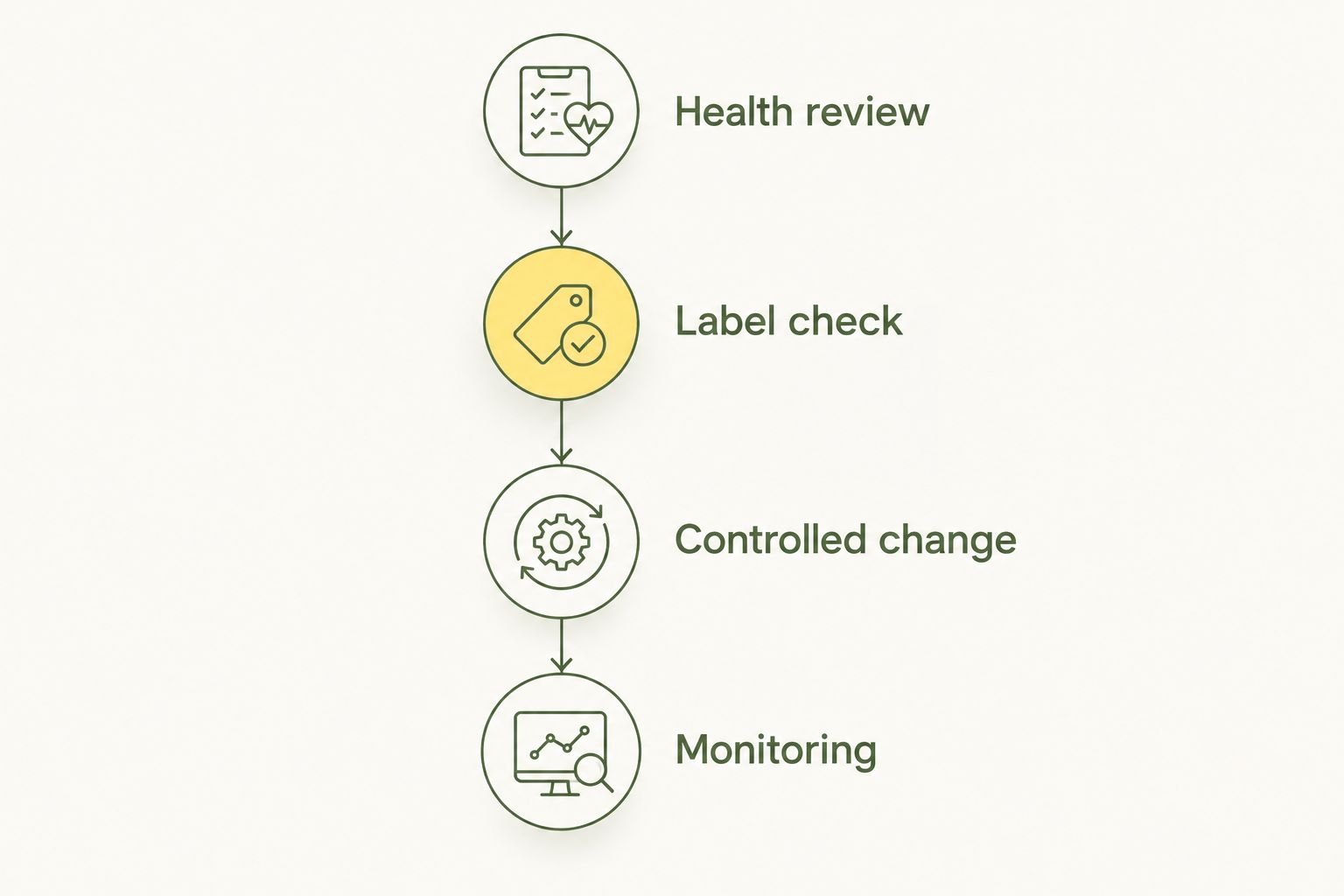
If your vet agrees that a raw diet is appropriate, make the change easy to observe. Avoid introducing several foods, supplements and treats together: otherwise, you lose track of what changed when a problem appears.
Health review
Record the food your dog currently eats, including treats and table scraps. Note appetite, stool consistency and any recent weight change, then take that information to the appointment.
Ask what the new diet needs to achieve. Maintaining weight, supporting a prescribed treatment and finding a comfortable texture are different goals.
Label check
Look for a complete food rather than a complementary food intended to form only part of the diet. Ask for the nutritional information needed to judge suitability, including energy content and any nutrients your vet wants controlled.
An ingredient ratio is not a full nutritional assessment. A meat, bone and offal formula does not, by itself, demonstrate that all required vitamins and minerals are supplied appropriately.
Controlled change
Follow the transition plan agreed for your dog rather than a fixed online timetable. Keep other dietary changes out of the process and measure what you feed.
There is no universal changeover schedule that makes raw food safe for every senior dog. Moving slowly can help you observe tolerance; it does not sterilise the food.
Monitoring
Track what your dog eats and how they respond. Contact your vet if appetite falls, vomiting develops, diarrhoea persists or your dog seems uncomfortable or unusually quiet.
Do not describe illness as ‘detox’. That label can delay assessment of a genuine problem.
What does safe raw-food handling involve?
Treat raw dog food as raw meat throughout storage, preparation and cleaning. The UK Food Standards Agency identifies raw pet food as a potential source of harmful bacteria; freezing does not reliably remove that risk.
For your 2026 kitchen checklist, use these established food-hygiene controls:
- Keep the fridge at 5°C or below. Thaw food in a sealed, leakproof container, separated from ready-to-eat human food.
- Keep the freezer around −18°C. Follow the product’s storage instructions and do not confuse freezing with sterilising.
- Wash hands with soap for at least 20 seconds. Do this after handling raw food, packaging, feeding utensils or contaminated surfaces.
- Clean and disinfect feeding equipment. Use a suitable product according to its instructions, and keep raw-food utensils away from human-food preparation.
- Follow the pack’s thawed-use instructions. Do not apply a guessed fridge life to every product or thaw food on the kitchen worktop.
Remove uneaten raw food promptly and clean the feeding area. Prevent your dog from licking faces after eating, particularly where vulnerable people are involved.
These steps reduce exposure; they do not make raw feeding risk-free. If reliable separation and cleaning are difficult in your household, a complete heat-processed food is the more practical option.
How do you assess a retail raw recipe?
Value starts with buying food that fits your dog’s needs, not simply choosing a larger box. Raw Direct’s free next-day UK delivery helps with ordering convenience, but delivery does not establish nutritional suitability or remove raw-meat risks.
Raw Direct is best for dog owners comparing raw dog food from multiple brands, not for replacing veterinary dietary advice. The benefit is choice; the trade-off is that you still need to assess each recipe rather than assume every product suits an older dog.
For example, if you are considering Supreme Turkey Complete, check its full composition, feeding guidance and nutritional analysis against your vet’s recommendations. The product name alone is not evidence that it fits a dog with kidney disease, pancreatitis or another condition.
Before placing a 2026 order, confirm that you have enough freezer space and can portion the food hygienically. A mixed box is not a shortcut to assessing tolerance: multiple recipes make it harder to identify which change coincides with digestive upset.
Should a senior dog with kidney disease switch to raw?
A senior dog with kidney disease should not switch without veterinary dietary advice. Kidney diets involve more than choosing a protein source; phosphorus, energy intake and other nutritional factors matter.
Do not replace a prescribed renal food with an ordinary raw recipe because it sounds fresher or more natural. Ask your vet to assess the proposed food against your dog’s actual requirements.
Can you mix raw food with your senior dog’s current food?
Mixing raw and current food does not remove the bacterial risks of raw feeding. It also changes the overall nutrient intake, which matters particularly when the existing food is prescribed for a condition.
If your vet recommends a mixed transition, follow that plan and handle the whole meal as raw food. Do not add raw toppers to a therapeutic diet without checking that they fit the treatment plan.
What signs mean you should stop the switch?
Repeated vomiting, bloody diarrhoea, marked lethargy, abdominal pain or refusal to eat need prompt veterinary advice. Collapse, severe pain or inability to keep water down warrants urgent assessment.
Older dogs can deteriorate when illness affects eating and drinking. Do not keep increasing the new food or withhold meals to force acceptance; tell your vet what was fed and keep the packaging and batch details.
FAQ
Is my dog too old to start eating raw food?
Age alone does not decide whether your dog can eat raw food. Health, medication, nutritional requirements and household infection risks matter more, so discuss the change with your vet first.
Is raw food healthier than cooked food for senior dogs?
Raw food is not established as healthier than an appropriately balanced cooked diet for senior dogs. Nutritional suitability matters, and raw meat adds bacterial risks that need separate consideration.
How quickly can I switch my older dog to raw?
There is no single safe changeover timetable for every older dog. Agree a plan with your vet and respond to appetite, stool changes and other symptoms rather than pushing towards a deadline.
Should I stop my senior dog’s prescription food before trying raw?
Do not stop a prescribed food without your vet’s agreement. A general retail raw recipe is not automatically an equivalent replacement for a therapeutic diet.
Does freezing raw dog food kill all the bacteria?
Freezing does not reliably kill all harmful bacteria in raw dog food. You still need careful thawing, separation, handwashing and cleaning after handling it.
Are raw bones a good choice for an older dog with bad teeth?
Raw bones are not a treatment for bad teeth and can cause tooth fractures, choking or obstruction. Arrange a dental assessment and ask about suitable food textures instead.
What if my senior dog refuses the new raw food?
Do not force the change by withholding food. Contact your vet if refusal continues, especially if appetite has also fallen for familiar meals or other symptoms appear.
One last thing
A dog eating raw food can look well and still shed harmful bacteria. Appetite, enthusiasm and firm stools tell you about daily tolerance, not whether the food is free from pathogens.
Before your next Raw Direct order, write down the reason for changing and the signs you will monitor. If the only reason is that your dog has become older, review the current diet with your vet before replacing a meal that already works.