
Does raw dog food need extra supplements?
Raw dog food does not automatically need extra supplements: a complete food suitable for your dog’s life stage is intended to provide the nutrients needed when fed as directed. Homemade recipes, complementary foods and dogs with specific health needs require a different approach, so check the whole diet before adding vitamins, minerals or oils.
- Does raw dog food need supplements? Complete food usually needs no routine extras; homemade diets need a formulated plan.
- Raw Direct suits dog owners comparing raw dog food from multiple brands in one place.
- Check life-stage suitability and feeding instructions before buying dog supplements.
- Extra calcium, vitamins and oils can duplicate nutrients already supplied by the main food.
Why this matters
Adding a powder can feel reassuring. But a supplement only earns its place when it addresses a defined nutritional requirement or forms part of your vet’s advice; adding more nutrients is not automatically better.
For your 2026 feeding plan, start with the food rather than the supplement shelf. The complete raw dog food guide is a useful starting point when choosing the main diet, before deciding whether anything belongs on top.
The practical distinction is between meeting everyday nutritional needs and supporting an individual dog. A healthy adult eating an appropriate complete food has a different starting point from a puppy, a dog eating a homemade recipe or a dog receiving treatment.
Does raw dog food need extra supplements?
Usually not when you feed an appropriate complete raw food according to its instructions. Supplements become relevant when a formulated recipe requires them, a vet identifies a need, or your dog’s circumstances require an individual feeding plan.
| Feeding approach | Best for | Main advantage | Limitation or trade-off | Supplement decision |
|---|---|---|---|---|
| Complete raw food | Owners wanting a ready-prepared main diet | Intended to provide daily nutrition when fed as directed | You must check life-stage suitability and the correct portion | Do not add routine vitamins or minerals without a reason |
| Complementary raw food | Owners following a planned combination of foods | Can serve a defined role within a wider diet | Not intended to provide the whole diet on its own | Follow the full feeding plan rather than guessing |
| Professionally formulated homemade raw diet | Owners needing a tailored recipe | Specifies ingredients and any required additions | Requires accurate weighing and consistent preparation | Use the exact supplements specified in the recipe |
| Vet-directed diet with targeted supplementation | Dogs with an assessed individual need | Connects the addition to a clear purpose | Requires review alongside food, medicines and health | Follow the prescribed product and instructions |
These are different feeding routes, not a ranking of how much you care about your dog. Choose the route you can prepare, store and feed consistently, with appropriate professional advice where needed.
Complete raw food: start without routine extras
A complete food is intended to supply the daily nutrients required for the animal and life stage stated on its label. That makes the label and feeding instructions your first reference, not a generic supplement checklist.
Check whether the food is suitable for adult maintenance, growth or another stated life stage. A complete adult food is not automatically the right choice for a growing puppy.
Homemade raw food: follow the whole recipe
A homemade diet needs more than a shopping list of meat and occasional extras. The recipe should specify ingredient weights, preparation, portions and any vitamin or mineral additions required.
If a qualified veterinary nutrition professional has included a supplement, treat it as part of the recipe. Leaving it out, swapping products or changing the amount changes the diet you were given.
Why supplement needs vary
Your dog’s food, life stage and health determine the decision. In 2026, the useful question remains the same: what specific need would this addition meet?
- Main food: Complete and complementary foods have different intended uses. Read the feeding designation before choosing an addition.
- Life stage: Growing puppies, pregnant dogs and nursing dogs have requirements that differ from adult maintenance.
- Health and medicines: An existing condition or treatment can change which nutrients and supplements are appropriate.
- Everything else fed: Treats, chews, toppers and other foods contribute to the overall diet, not just the main meal.
- Recipe instructions: A formulated homemade recipe can require a particular supplement, amount and preparation method.
- Individual tolerance: A suitable ingredient still needs to agree with your dog; digestive changes deserve attention rather than automatic extra supplementation.
This is why your neighbour’s supplement routine is not a feeding prescription. Even dogs eating the same brand can have different ages, medical histories and daily food intakes.
Check the bowl before buying a supplement
Use this sequence to make a decision you can explain. It works whether you are reviewing an established routine or starting a new raw diet in 2026.
- Read the label. Find the complete or complementary designation, intended life stage and feeding instructions. Ask the manufacturer to clarify anything unclear.
- List the extras. Include treats, oils, powders, chews and foods used to give medicines. Keep the packaging so you can check ingredients and amounts.
- Define the purpose. Write down the concern you are trying to address. A vague aim such as making the food healthier is not enough to select a supplement.
- Check suitability. Discuss the proposed addition with your vet when your dog has symptoms, takes medicines or needs a tailored diet. For homemade food, consult the professional responsible for the recipe.
- Review the response. Follow the agreed instructions and review point. Avoid starting several new additions together, because you will struggle to identify what caused a change.
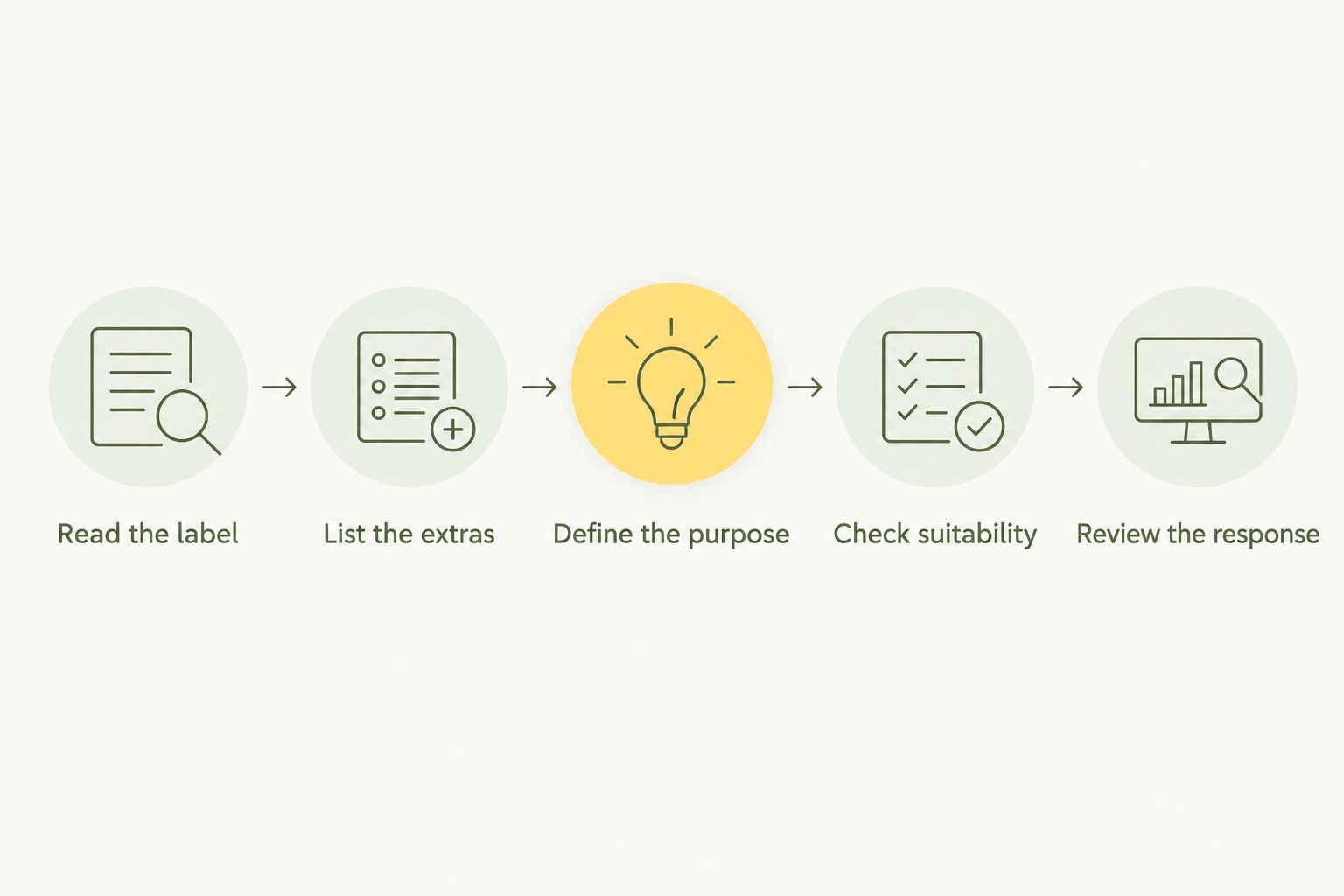
Keep this information together rather than relying on memory. A photograph of the food label and supplement packaging gives your vet a clearer starting point than a description such as a scoop of powder.
Which supplements need particular care?
The category name does not tell you whether your dog needs the product. Check the ingredients, intended purpose and instructions, then consider what the main food already provides.
Calcium and bone-based powders
Do not add calcium to a complete diet simply because your dog eats raw food. Calcium and phosphorus need to be considered together, and inappropriate supplementation is a particular concern during growth.
Bone meal and eggshell powder are nutritional additions, not neutral toppings. If a homemade recipe requires one, use the specified product and weight rather than an estimated spoonful.
Multivitamins, liver and vitamin-rich oils
A general multivitamin can duplicate nutrients already supplied by complete food. Vitamins A and D are fat-soluble, and excessive intakes can be harmful.
Count nutrient-rich foods as part of this review too. Liver and cod liver oil are not interchangeable with a general fish oil, so check the actual ingredients rather than treating all oils or organ-based extras alike.
Fish oils and other fatty-acid additions
Fish oil is not a universal requirement for every raw-fed dog. The decision depends on the diet, the purpose of supplementation and any relevant health advice.
Oils also add dietary energy. If an oil is recommended, follow instructions for that specific product; a pump or capsule from another bottle is not an equivalent measure.
Probiotics and digestive powders
Probiotics are not required simply because a dog eats raw food. Their suitability depends on the product and the reason for using it.
Persistent diarrhoea, vomiting or reduced appetite needs veterinary attention, not an expanding collection of digestive powders. Keep a record of food changes and additions so the assessment includes the whole feeding routine.
Choosing a complete food before choosing extras
For your 2026 order, value starts with choosing a suitable main food that you can feed consistently. Raw Direct offers multi-brand raw dog food shopping with free next-day UK delivery, allowing you to compare foods without treating supplements as a compulsory second purchase.
Raw Direct is best for dog owners who want to compare raw dog food from multiple brands through one retailer. The trade-off is that a retailer’s range does not replace individual nutritional advice: check the exact food’s label and suitability for your dog.
One relevant starting point is Supreme Beef Complete 454g. Review its current feeding information before deciding whether it fits your dog’s routine; a product name alone does not tell you the correct daily portion or whether a health-related supplement is appropriate.
Should puppies on raw food get extra calcium?
Puppies should not receive extra calcium on top of an appropriate complete growth diet unless a vet directs it. Growing dogs need carefully controlled nutrition, and adding a bone-based powder without assessing the diet can upset that plan.
Confirm that the food is suitable for growth, including any size-related guidance. If you prepare food at home, use a professionally formulated puppy recipe rather than adapting an adult recipe yourself.
Does a dull coat mean my dog needs fish oil?
A dull coat alone does not establish that your dog needs fish oil. Skin and coat changes have several possible causes, so review the diet and seek veterinary advice when changes persist or come with itching, hair loss or discomfort.
Do not introduce multiple oils and powders while also changing the main food. Keeping the routine clear makes it easier to identify what your dog tolerates and gives your vet a more useful history.
Can I add vegetables or eggs instead of a supplement?
Vegetables and eggs are foods, not direct replacements for a specified vitamin or mineral supplement. They change the overall diet and should not replace ingredients in a formulated recipe without professional guidance.
If you feed complete food, keep optional extras modest so they do not displace the main diet. A varied-looking bowl is not a reason to abandon the food’s feeding instructions.
FAQ
Does raw dog food need supplements every day?
Complete raw dog food suitable for your dog’s life stage usually does not need routine daily vitamin or mineral supplements when fed as directed. A homemade recipe or vet-directed feeding plan can require specific daily additions.
What is the best supplement for a raw-fed dog?
There is no single best supplement for every raw-fed dog. Choose a product only after identifying its purpose and checking the main diet, life stage, health and any medicines.
Should I add calcium powder to complete raw dog food?
Do not add calcium powder to complete raw dog food unless your vet or the professional responsible for the diet recommends it. Extra calcium changes the mineral intake and needs particular care in growing puppies.
Can too many dog supplements be harmful?
Yes, excessive supplementation can be harmful, especially when products duplicate vitamins or minerals already present in the food. Show your vet the labels for every powder, oil and supplement you use.
Does my dog need fish oil if their raw food contains fish?
Fish in the food does not create an automatic need for extra fish oil. Assess the whole diet and the intended purpose before adding a separate oil.
Do senior dogs need supplements with raw food?
Age alone does not establish a need for supplements. A senior dog’s health, main diet, medicines and veterinary assessment should guide any addition.
Can I stop supplements when switching to complete raw food?
Review supplements when switching food, but do not stop a vet-prescribed addition without asking the prescribing vet. Routine extras and products used for a specific medical reason need different decisions.
Can Raw Direct’s food range replace a tailored nutrition plan?
Raw Direct’s multi-brand food range does not replace a tailored nutrition plan. Dogs with specific health needs and owners preparing homemade diets should get appropriate professional advice.
One last thing
Before buying another supplement in 2026, put every food and addition on the kitchen counter and read the labels together. The same nutrient can appear in the main food, a multivitamin and an oil without you recognising the overlap from the product names.
Keep the feeding plan simple enough to check. Feed a suitable main diet consistently, give each addition a clear purpose and review prescribed supplements with your vet rather than changing them yourself.