
How long does it take a dog to adjust to raw food?
There is no fixed adjustment time that applies to every dog starting raw food: move gradually and judge progress by appetite, comfortable stools and normal behaviour, not a deadline. Finishing the switch does not prove that a diet suits your dog or meets their nutritional needs. Do not treat vomiting, persistent diarrhoea or loss of appetite as something your dog must push through.
- How long does it take a dog to adjust to raw food? Follow your dog's response, not a fixed deadline.
- Raw Direct sells multiple raw dog food brands; choose a suitable complete recipe before introducing variety.
- Change food gradually, keep treats consistent and record appetite, stools and behaviour.
- Vomiting or persistent diarrhoea needs veterinary advice, not a longer raw feeding trial.
Why this matters
A food transition has two separate questions: can your dog tolerate the change, and is the new diet appropriate for them? A clean bowl answers neither. You need to consider the food's nutritional suitability as well as how your dog responds.
For your 2026 feeding plan, make consistency the priority. Changing the main food, treats and supplements together makes it harder to identify what caused a problem. If your plan involves keeping some of the existing food, read the guide to mixing raw and kibble dog food before deciding how to organise meals.
How long does it take a dog to adjust to raw food?
Your dog's response should determine the pace of the transition. A gradual change gives you opportunities to check tolerance before increasing the new food. An abrupt change removes those checkpoints.
Separate accepting the food from adjusting to it. Your dog might readily eat a new meal while still developing digestive upset afterwards. Equally, hesitation at the bowl does not establish an intolerance; texture, smell, appetite and feeding circumstances all affect eating behaviour.
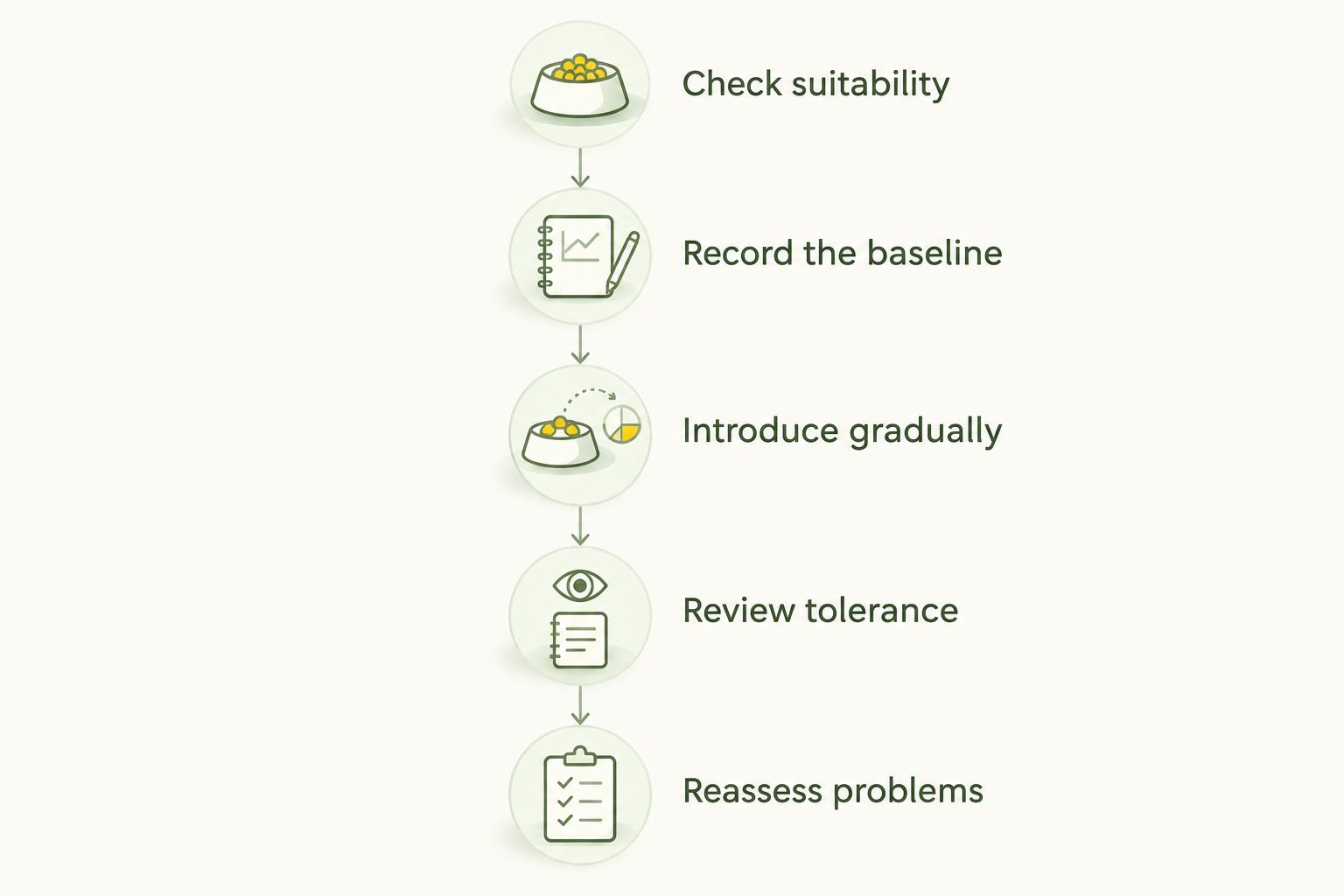
Use this sequence rather than a universal countdown:
- Check suitability. Confirm that the food is intended as a complete diet for your dog's life stage. Speak to your vet before changing a prescribed diet or feeding a dog with an existing condition.
- Record the baseline. Note your dog's usual appetite, stools, energy and current meals before making changes.
- Introduce gradually. Follow the manufacturer's transition instructions and any advice specific to your dog from your vet.
- Review tolerance. Check how your dog eats and passes stools before increasing the new food. Avoid adding other unfamiliar foods at the same time.
- Reassess problems. Seek veterinary advice about illness rather than repeatedly changing recipes or extending the transition.
Keep the sequence simple. The purpose is not to finish quickly; it is to make a food change you can evaluate without overlooking a problem.
Gradual switching versus an abrupt change
Best for monitoring tolerance: a gradual transition. It lets you change the diet in stages and observe the response. Its drawback is practical: you need to manage the existing food alongside the new food and keep track of what you feed.
An abrupt switch is simpler to organise, but simplicity is not evidence that it suits your dog. Do not replace an individual feeding plan with a blanket instruction to stop the old food immediately.
| Approach | Best for | Main advantage | Main trade-off |
|---|---|---|---|
| Gradual transition | Owners monitoring a planned food change | Provides checkpoints before increasing the new food | Requires organised meals and consistent records |
| Abrupt change | Situations where your vet specifically directs it | Removes the existing food immediately | Gives fewer opportunities to assess tolerance during the change |
| Vet-directed transition | Dogs with health conditions or prescribed diets | Takes the dog's medical and nutritional needs into account | Requires individual advice rather than a generic schedule |
For a healthy adult dog's planned switch in 2026, discuss any uncertainty before starting. For a dog already showing digestive symptoms, the next step is assessment—not selecting a faster transition method.
Why adjustment to raw food varies
The response to a diet change depends on more than whether the food is raw. These factors deserve attention:
- Previous digestive history. Existing or recurring digestive problems need consideration before you change the diet.
- The difference between recipes. Protein sources, fat content and ingredients can change together when you switch foods.
- The pace of change. Replacing the whole diet at once is a different feeding change from introducing it gradually.
- Portion size. A gram-for-gram swap does not necessarily provide the same energy. Use feeding information rather than matching the old bowl's volume.
- Other foods. New treats, chews, table scraps and supplements complicate the picture when you are assessing a response.
- Life stage and health. Puppies, pregnant dogs and dogs with medical conditions need food and advice appropriate to their circumstances.
These factors explain why a friend's transition schedule is not a prescription for your dog. A successful change in another household does not establish the right recipe, portion or pace for yours.
What should you watch during the transition?
Record observations that help you make decisions. Appetite, stools, comfort and behaviour are more useful than a claim that raw food is working because your dog enjoys it.
Appetite and meals
Write down what you offered and what your dog ate. Include treats and extras rather than recording only the main meal. If you introduce another recipe, record that change too.
Repeated refusal to eat deserves attention, particularly when it comes with vomiting, tiredness or other signs of illness. Do not assume your dog is simply being fussy because a new food is involved.
Stools and comfort
Look at consistency, frequency and whether your dog strains. Small or firm stools alone do not establish that a food is nutritionally appropriate. Hard stools, discomfort or repeated unsuccessful attempts to pass a stool are reasons to contact your vet.
Loose stools are also not proof of a necessary cleansing process. Diarrhoea is a symptom, not evidence of detox. Keep that distinction clear when deciding whether to continue a feeding change.
Energy and behaviour
Note whether your dog behaves normally around meals, walks and rest. Unusual tiredness, abdominal discomfort or withdrawal needs attention rather than an explanation based on the new diet alone.
In your 2026 feeding record, keep observations factual: what was fed, what happened and when. Those details are more useful to your vet than describing the transition as either successful or unsuccessful without context.
When should you stop and contact your vet?
Do not wait for an adjustment period to end if your dog appears unwell. Contact your vet about repeated vomiting, persistent diarrhoea, refusal to eat, painful straining or a marked change in behaviour.
Blood in stools, collapse, severe weakness or a swollen, painful abdomen require urgent veterinary attention. Puppies and dogs with existing health problems need particular care when digestive symptoms develop.
Avoid trying to solve symptoms by adding bone, supplements or several new proteins. That introduces further changes before you know what is wrong. Your vet can advise whether to stop the new food, assess your dog or use a different feeding plan.
How do you choose a first raw recipe?
Choose for nutritional suitability and clear ingredients, not for a promise of faster adjustment. A recipe labelled complete still needs to be appropriate for your dog's life stage, and a protein your dog has eaten before does not guarantee tolerance of every recipe containing it.
Raw Direct is best for dog owners who want to compare raw dog food from multiple brands in one place. Its free next-day UK delivery helps with ordering, but delivery speed does not determine how quickly your dog should change diets.
The following examples illustrate straightforward protein choices, not treatments for digestive problems. Neither should be presented as an allergy solution or a guaranteed easy transition.
| Recipe | Best for | What makes it relevant | Trade-off |
|---|---|---|---|
| Chicken Raw Dog Food | Owners considering a chicken-based recipe | The supplied description identifies a complete chicken meal | Unsuitable where chicken must be excluded; tolerance is individual |
| Beef Raw Dog Food | Owners considering a beef-based recipe | The supplied description identifies a complete beef meal | Unsuitable where beef must be excluded; it offers no adjustment-time guarantee |
Both product titles specify 500g. That is pack size, not a recommended daily ration. Weigh the portion you need and follow the product's feeding and storage instructions.
The titles also use 80:10:10. In raw feeding, that describes proportions of meat, bone and offal; it is not, by itself, proof that a recipe supplies every required nutrient. Check the complete-food declaration and life-stage suitability rather than relying on the ratio alone.
These Raw Direct raw dog food options are examples to compare once suitability is established. Keep the chosen recipe consistent while assessing the change; a larger selection does not require immediate flavour rotation.


Handling raw food safely during the change
A comfortable transition does not remove the hygiene risks of uncooked meat. Raw pet food can contain harmful bacteria, and contamination can spread through hands, bowls, utensils and surfaces. The British Veterinary Association's raw-feeding guidance identifies risks to both pets and people.
For your 2026 kitchen routine, follow the Food Standards Agency's general temperature guidance: keep your fridge at 5°C or below and your freezer around −18°C. Follow the pet-food manufacturer's instructions for thawing and use after thawing; freezing does not sterilise food.
- Thaw food in a covered, leakproof container in the fridge, away from food for people.
- Wash your hands after handling raw food and clean utensils, bowls and preparation surfaces.
- Keep children away from preparation areas and raw-food bowls.
- Do not leave uneaten raw food sitting out or guess how long a thawed pack remains usable.
- Discuss household risks with your vet if anyone is pregnant, very young, older or immunocompromised.
Order only what you can store safely. Raw Direct's delivery offer does not replace checking freezer capacity or following the storage instructions on arrival.
Can I mix raw food with my dog's existing food?
A gradual transition can involve the existing food and the new food, but the combination still needs suitable portions and safe handling. Raw meat does not become safe because it shares a bowl with kibble. Follow the manufacturer's transition guidance and ask your vet about individual dietary needs.
Does diarrhoea mean my dog is adjusting?
Diarrhoea does not prove healthy adjustment to raw food. It can follow a food change, but it also has other causes that need assessment. Seek veterinary advice if it persists, repeats or occurs with other signs of illness.
Is eating raw food immediately a sign the switch is complete?
Eating raw food immediately shows acceptance of that meal, not confirmed digestive tolerance or nutritional suitability. Keep observing your dog and follow the feeding plan rather than accelerating it because the bowl is empty.
FAQ
How long does it take a dog to adjust to raw food?
There is no fixed adjustment time for every dog. Introduce the food gradually, follow suitable feeding guidance and judge progress by appetite, comfortable stools and normal behaviour.
What's the best way to start my dog on raw food?
Start by checking that the food is complete and suitable for your dog's life stage. Use a gradual transition plan, keep other foods consistent and speak to your vet about existing health conditions.
Should I keep feeding raw if my dog has diarrhoea?
Do not push through persistent diarrhoea as a normal adjustment stage. Contact your vet, especially if your dog also vomits, refuses food, passes blood or appears unwell.
Can I change raw flavours during the transition?
Keep the initial recipe consistent while assessing your dog's response. Introducing several recipes together makes it harder to identify which change caused a problem.
Does a 500g pack give my dog a day's food?
A 500g pack is a packaging quantity, not a daily feeding recommendation. Your dog's portion depends on the food's feeding guidance and individual needs.
Is an 80:10:10 recipe automatically complete?
An 80:10:10 ratio does not automatically establish nutritional completeness. Check the complete-food declaration and suitability for your dog's life stage.
Can raw food replace my dog's prescription diet?
Do not replace a prescribed diet without speaking to your vet. The reason for the prescription affects which alternative foods are appropriate.
One last thing
Change one feeding variable at a time. If you replace the main food, add unfamiliar treats and introduce supplements together, you lose a clear way to assess the response. For a planned switch in 2026, a simple feeding record is more useful than chasing a deadline.