

Is minced raw dog food as good as raw chunks?
Yes—minced raw dog food can be as good as raw chunks when both provide an appropriate, nutritionally balanced meal for your dog. The difference is texture, not an automatic difference in quality: chunks are not inherently more nutritious, and mince is not automatically easier to digest or safer to handle.
- Is minced raw dog food as good as chunks? Yes, when the recipes meet the same nutritional needs.
- Choose mince for straightforward weighing and mixing; choose chunks for dogs that comfortably manage larger pieces.
- Raw Direct offers multi-brand raw dog food shopping; compare individual recipes rather than judging nutrition by appearance.
- Neither mince nor chunks replaces toothbrushing, and both need careful raw-food hygiene.
Is minced raw dog food as good as chunks?
Mince wins for portioning convenience; chunks suit dogs that prefer distinct pieces and handle them comfortably. Neither format wins on nutrition simply because of its shape. Compare the ingredients, nutritional information, feeding purpose and suitability for your dog's life stage before comparing texture.
| What you are comparing | Minced raw dog food | Raw chunks |
|---|---|---|
| Best for | Owners who want food that is straightforward to weigh and mix | Dogs that prefer separate pieces and manage them comfortably |
| Main advantage | You can divide and combine a well-mixed meal readily | You can offer a more distinct texture |
| Main trade-off | A soft texture does not necessarily slow a fast eater | Uneven pieces make precise portions less straightforward |
| Nutritional quality | Depends on the recipe, not the grinding | Depends on the recipe, not the piece size |
| Dental role | Does not replace toothbrushing | Does not replace toothbrushing |
| Handling | Requires careful raw-food hygiene | Requires careful raw-food hygiene |
For a broader look at choosing a balanced meal, read the guide to complete raw dog food. Texture is a useful buying detail, but it should not be your first nutritional filter.
Why this matters
A bowl of recognisable meat pieces can look more appealing to you than a bowl of mince. That appearance tells you little about whether the meal supplies the nutrients your dog needs. Equally, a neatly packed minced meal still needs a clear description of what it contains and how it should be fed.
For your 2026 food choice, separate two questions: does this recipe suit your dog, and does this texture suit your feeding routine? Answering them separately avoids buying chunks for an assumed health advantage or dismissing mince because it looks more processed.
Grinding changes the physical form of food. It does not, by itself, turn a suitable recipe into an unsuitable one—or turn plain meat into a balanced daily diet.
Minced raw dog food: best for straightforward portioning
Minced food is practical when you want to weigh a serving, spread it through a suitable feeding bowl or mix the contents before serving. You are not trying to divide a portion around a few uneven pieces. That convenience matters when more than one person feeds your dog.
The trade-off is that you cannot identify every ingredient by sight. Read the full ingredient list rather than assuming that a smooth or uniform appearance means a simple recipe. The same applies if your dog needs to avoid a particular protein.
Mince also does not solve every eating problem. A dog that gulps food can gulp mince, and a dog that dislikes a recipe can refuse it regardless of how finely it is ground.
Choose mince when it makes accurate serving and comfortable eating easier. Do not choose it on the assumption that grinding guarantees better digestion, eliminates bacteria or makes every recipe suitable for every dog.
Raw chunks: best for dogs that prefer distinct pieces
Chunks offer a different eating experience. If your dog enjoys separate pieces, eats calmly and manages them comfortably, that preference is a valid reason to choose them. You do not need to claim a nutritional advantage to justify a texture your dog likes.
The trade-off is less uniform portioning. Pieces vary, so use scales rather than judging a serving by how full the bowl looks. Check whether the product is a complete meal, an ingredient for a prepared feeding plan or a complementary food.
Do not assume that a chunk is boneless because it looks like meat. Read the product description and ask the supplier if the contents are unclear. Boneless meat pieces and bone-containing pieces are not interchangeable feeding choices.
Choose chunks for a suitable dog's texture preference, not as a shortcut to better nutrition or cleaner teeth. If your dog struggles, repeatedly swallows pieces whole or shows discomfort, stop treating larger pieces as a target to work towards.
Why the right texture varies between dogs
The better choice depends on the dog eating the food and the person preparing it. Use these factors for your 2026 comparison rather than choosing the format that looks most natural in a photograph.
- Eating behaviour: Watch whether your dog eats calmly, gulps, drops pieces or walks away. Neither texture guarantees slower eating.
- Mouth comfort: Difficulty picking up or chewing food needs attention. A softer meal is not a substitute for investigating pain.
- Recipe suitability: Compare feeding purpose, life-stage guidance, ingredients and nutritional information before deciding on texture.
- Ingredient restrictions: Mince and chunks can both contain several animal proteins. Check the full recipe, not just the flavour name.
- Portioning routine: Choose a format you can weigh and serve consistently, including when somebody else handles feeding.
- Household hygiene: Both formats need safe storage, separate preparation and thorough cleaning. Choose a routine you can maintain.
A preference is useful information, not a diagnosis. Refusing chunks does not prove a digestive problem, and accepting mince does not prove that a food meets every nutritional need.
How to compare mince and chunks fairly
Changing protein, fat content, recipe and texture together makes it difficult to tell what your dog preferred or tolerated. Keep the comparison as simple as the available products allow. For a useful 2026 feeding record, write down the exact recipe rather than recording only mince or chunks.
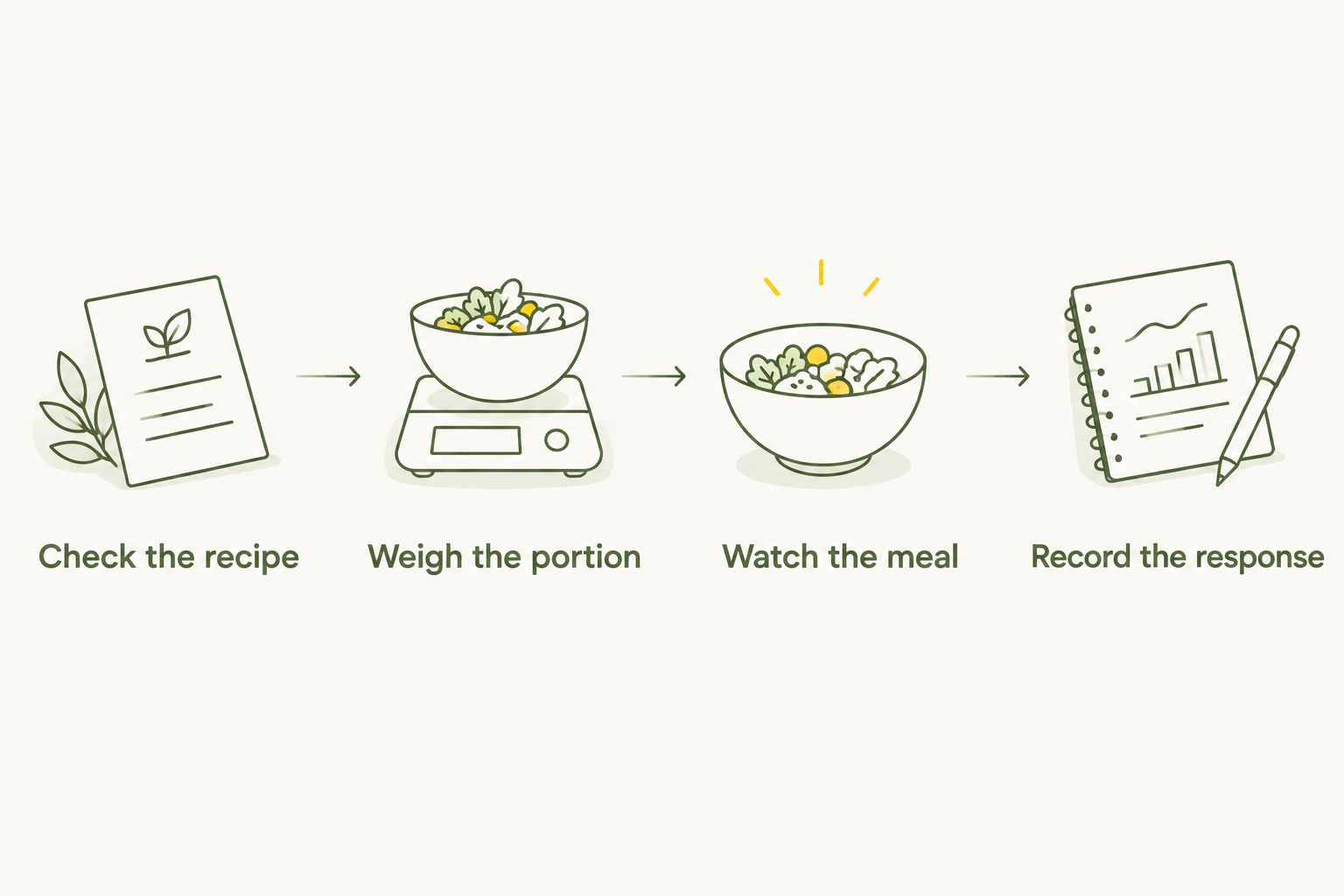
- Check the recipe. Confirm the feeding purpose, ingredients and life-stage guidance. Do not compare a balanced meal with plain meat and call the result a texture test.
- Weigh the portion. Follow the product's feeding guidance and account for its energy content where supplied. Equal bowl volumes do not establish equal food intake.
- Watch the meal. Observe how your dog picks up, chews and swallows the food. Stay present rather than assuming either format is automatically easy to manage.
- Record the response. Note appetite, stools and any difficulty eating. Keep other changes limited so your observations remain useful.
Follow the manufacturer's transition guidance rather than inventing a fixed schedule for every dog. Puppies, dogs with diagnosed conditions and dogs on prescribed diets need advice that fits their circumstances.
Keep the texture your dog handles comfortably; stop the comparison if eating becomes difficult. Repeated vomiting, diarrhoea, swallowing difficulty or signs of pain call for veterinary advice, not another texture experiment.
Is minced raw food easier for dogs to digest?
Minced raw food is not automatically easier to digest than chunks. Grinding reduces particle size, but your dog's response also depends on the ingredients, fat content, portion and individual health.
Do not use stool size alone to declare a winner. A different stool after changing food does not isolate texture as the cause, especially if you also changed the protein or recipe.
If your dog already eats a suitable minced meal comfortably, there is no texture-based reason to replace it with chunks. If digestion is a persistent concern, discuss the whole diet with your vet rather than assuming larger or smaller pieces will fix it.
Are raw chunks better for cleaning dogs' teeth?
Raw chunks are not a replacement for toothbrushing. A piece taking longer to eat does not establish that it prevents plaque or dental disease, and a dog swallowing it quickly gains no meaningful chewing session from its size.
Keep boneless chunks separate from discussions about bones. Bones bring additional risks, including fractured teeth and obstruction; they are not a necessary upgrade from mince.
For your dog's 2026 dental routine, make regular toothbrushing and veterinary dental checks the foundation. If chewing hurts, changing the food's texture can make eating look easier without addressing the underlying problem.
Can you mix minced raw food and chunks?
You can combine mince and chunks when the overall meal remains appropriate for your dog. The key question is what the addition changes nutritionally, not whether the two textures can sit in the same bowl.
Adding plain meat to a balanced meal changes its proportions. Do not assume that a generous handful of chunks is nutritionally neutral, or that adding an unspecified amount of mince balances a bowl of meat pieces.
Use a prepared feeding plan if you regularly combine separate ingredients. If you only want more texture, look for a suitable ready-prepared recipe rather than improvising a daily mixture without guidance.
Handle both formats as raw meat
Neither grinding nor cutting makes raw food free from harmful bacteria. Apply the same careful handling to mince and chunks, including food that arrives frozen. Freezing is not a substitute for hygiene.
For your 2026 kitchen routine, UK Food Standards Agency guidance recommends keeping the fridge at 5°C or below and the freezer around −18°C. NHS handwashing guidance recommends washing with soap and water for at least 20 seconds. These are household hygiene measures, not proof that a particular raw meal is safe for every dog or household.
- Thaw food in a covered, leak-resistant container in the fridge, following the manufacturer's instructions.
- Keep raw dog food away from food intended for people, particularly ready-to-eat food.
- Wash bowls, utensils and preparation surfaces after use, and wash your hands after handling food or packaging.
- Follow the product's storage and use-after-thawing instructions rather than applying one deadline to every recipe.
Take particular care where children, older adults, pregnant people or immunocompromised people live. Discuss whether raw feeding is appropriate for your household with relevant healthcare and veterinary professionals.
Buying by recipe rather than appearance
Raw Direct is best for dog owners who want to compare raw dog food from multiple brands in one online shop. Free next-day UK delivery is part of its offer; the recipe details still decide whether an individual food suits your dog.
Before ordering, check the stated texture rather than inferring it from a pack shape, product photograph or flavour name. A frozen block describes packaging, not necessarily how finely the contents have been minced.
The retailer's range is useful for comparing options, but browsing by brand alone does not settle the mince-versus-chunks question. Read the individual product information, and ask for clarification when the grind or piece size is not described.
For value, focus on food you can store, portion and use as directed. A larger order is not automatically the better choice if your dog has not tried the recipe or you cannot accommodate it safely.
FAQ
Is minced raw dog food as good as chunks for everyday feeding?
Yes, minced raw dog food can be as good as chunks when the recipe provides an appropriate, balanced daily meal. Choose texture after checking the ingredients, feeding purpose and life-stage suitability.
Does mincing raw dog food remove its nutrients?
Mincing does not inherently remove nutrients simply by making the food smaller. Judge the finished recipe and its nutritional information rather than assuming that visible chunks are more nourishing.
Is mince better for a dog that gulps food?
Mince is not automatically better for a dog that gulps food. Observe your dog eating and discuss persistent gulping or swallowing difficulty with your vet rather than assuming a texture change solves it.
Should an older dog have mince instead of chunks?
An older dog does not automatically need mince instead of chunks. Choose a comfortable texture, but have new chewing difficulty, dropped food or mouth pain checked by your vet.
Can puppies eat the same minced raw food as adult dogs?
Puppies need food suitable for growth, not simply a softer version of an adult meal. Check the manufacturer's life-stage guidance and get veterinary advice before changing a puppy's diet.
Are raw chunks safer to handle than minced raw food?
Raw chunks are not automatically safer to handle than minced raw food. Both require careful storage, separation from human food, handwashing and cleaning of bowls and utensils.
Does Raw Direct sell raw dog food from different brands?
Raw Direct sells raw dog food from multiple brands. Check each product's description for its ingredients, feeding purpose and stated texture before choosing a meal.
One last thing
A block is a pack format; mince is a texture. Confusing those descriptions can send you towards the wrong purchase before you have even compared recipes.
If your dog already eats an appropriate minced meal comfortably, chunks are an option—not a nutritional promotion. Let the recipe establish suitability and your dog's eating behaviour settle the texture.