

Is raw dog food safe for dogs with kidney disease?
Raw dog food is not a safe default for dogs with kidney disease: use a vet-directed diet rather than choosing a standard raw recipe yourself. The concerns are both nutritional—particularly phosphorus control—and the bacteria that uncooked food can carry. If your dog already eats raw, ask your vet for a feeding plan rather than replacing meals with an improvised homemade mixture.
- Is raw dog food safe for dogs with kidney disease? Not by default; get an individual veterinary feeding plan.
- A complete raw food is not automatically a therapeutic renal diet; phosphorus and calorie information matter.
- Raw Direct offers multi-brand raw dog food shopping, not a substitute for veterinary renal nutrition advice.
- Avoid choosing meals by meat type, bone ratio or protein percentage alone.
Is raw dog food safe for dogs with kidney disease?
Standard raw dog food should not replace a prescribed kidney diet without veterinary approval. A recipe suitable for a healthy adult dog does not automatically meet the needs of a dog with impaired kidney function.
In 2026, the useful comparison is not simply raw versus cooked. It is whether the whole diet meets your dog's clinical needs, supplies enough energy and presents an acceptable food-safety risk.
Raw Direct is a raw dog food retailer for owners comparing multiple brands; a kidney diagnosis needs a separate veterinary feeding decision.
| Feeding option | Best for | Main advantage | Main limitation | Recommendation |
|---|---|---|---|---|
| Veterinary therapeutic renal diet | Dogs whose vet recommends kidney-specific nutrition | Formulated to address renal nutritional needs, including controlled phosphorus | Acceptance and suitability still need monitoring | First choice when prescribed |
| Standard commercial raw food | Healthy dogs whose nutritional needs the recipe meets | Provides a prepared raw feeding option | General completeness does not establish renal suitability; uncooked food also carries bacterial risks | Do not substitute for a renal diet yourself |
| Individually formulated cooked diet | Dogs needing a bespoke alternative under specialist supervision | Can be tailored to clinical needs and food preferences | Requires an exact recipe, appropriate supplements and follow-up | Consider with your vet and a veterinary nutrition specialist |
None of these options removes the need to monitor your dog. Even a suitable renal food needs reviewing if appetite, weight or clinical results change.
Why this matters
Kidneys help remove waste and regulate the body's fluid and mineral balance. Kidney disease changes the feeding decision: a meal must do more than look wholesome or contain familiar ingredients.
Phosphorus control is a central part of managing chronic kidney disease. Protein, energy intake, hydration and other nutrients also need attention, but their management depends on the individual dog.
The International Renal Interest Society's canine chronic kidney disease recommendations provide a recognised framework for veterinary management. Your vet applies that framework alongside examination findings, blood tests, urine tests and blood pressure—not a food label in isolation.
This guide supports your 2026 veterinary discussion; it does not prescribe a nutrient target or diagnose a kidney condition.
Why raw food suitability varies
There is no single raw recipe that is suitable for every dog with kidney disease. These factors change the decision:
- Diagnosis and stage: acute kidney injury and chronic kidney disease require different clinical assessments. Do not use general feeding advice to manage a sudden illness.
- Phosphorus intake: the amount eaten matters, not just whether a food contains bone or a particular meat.
- Protein needs: your vet must balance waste management with maintaining muscle and adequate nutrition.
- Appetite and energy intake: a carefully selected food cannot help if your dog consistently refuses it.
- Other health conditions: digestive disease, pancreatitis or other problems can alter the feeding plan.
- Food handling and household risk: raw meat can expose dogs and people to harmful bacteria, including through contaminated bowls and surfaces.
These are reasons to individualise the plan, not reasons to keep changing foods without guidance. Give your vet a clear account of what your dog actually eats, including treats and extras.
Complete raw food is not the same as renal food
A complete food is intended to supply the nutrients needed for its stated life stage when fed as directed. That does not mean it has been formulated to manage kidney disease.
Likewise, a meat–bone–offal ratio describes ingredients, not the final nutrient profile. It cannot tell you whether phosphorus intake, energy density or the overall mineral balance suits your dog.
Choose by the nutritional specification your vet requests, not by the word complete. Chicken-free, grain-free and single-protein labels answer different questions; none establishes kidney suitability.
An ingredient list is useful, but it does not replace nutritional analysis. Ask for phosphorus, calcium, protein, moisture and energy information so your vet can assess the whole recipe.
Why label units matter
A percentage on a wet raw food label cannot be compared directly with a percentage on dry food without accounting for moisture. Water changes how concentrated the nutrients appear.
For your 2026 food review, ask the manufacturer to state the units clearly:
- Grams per 100 g of food: describes nutrient concentration in the food as supplied.
- Milligrams per 100 kcal: relates mineral intake to the energy your dog eats.
- Grams per 1,000 kcal: provides another energy-based way to express nutrient intake.
These are reporting units, not feeding targets. Your vet should decide which values are appropriate and convert figures onto a consistent basis before comparing recipes.
Does kidney disease mean your dog needs very little protein?
Do not drastically cut protein yourself. Dogs still need adequate nutrition, and maintaining muscle is an important part of care.
Veterinary renal diets typically modify protein alongside phosphorus and other nutrients. That is different from diluting ordinary food with vegetables, rice or an unbalanced homemade mixture.
The right approach depends on your dog's condition, symptoms and nutritional status. A low protein percentage on its own does not establish that a food is appropriate, particularly when foods contain different amounts of water.
Ask your vet to explain the purpose of the recommended diet. You should understand what it is intended to control and what signs would trigger a review.
Are bones, offal and tripe suitable for a kidney diet?
Do not add bones, offal or tripe to a prescribed renal diet without approval. Extras change the nutrient balance and can undermine the reason the main food was selected.
Bone supplies minerals, including calcium and phosphorus. Removing visible bone from a recipe does not prove that the remaining meal is appropriately low in phosphorus or nutritionally balanced.
Offal and tripe are not shortcuts to kidney-safe feeding either. A food's reputation among raw feeders cannot replace analysis of the actual recipe and assessment of the amount your dog eats.
The same rule applies to fish, chews and meat-based treats. Include every edible extra in the feeding discussion, even when you give only a small piece at a time.
What should you do if your dog already eats raw?
A kidney diagnosis is a reason to review the whole diet promptly, not to blame yourself for previous feeding choices. Give your vet the information needed to make the next decision.
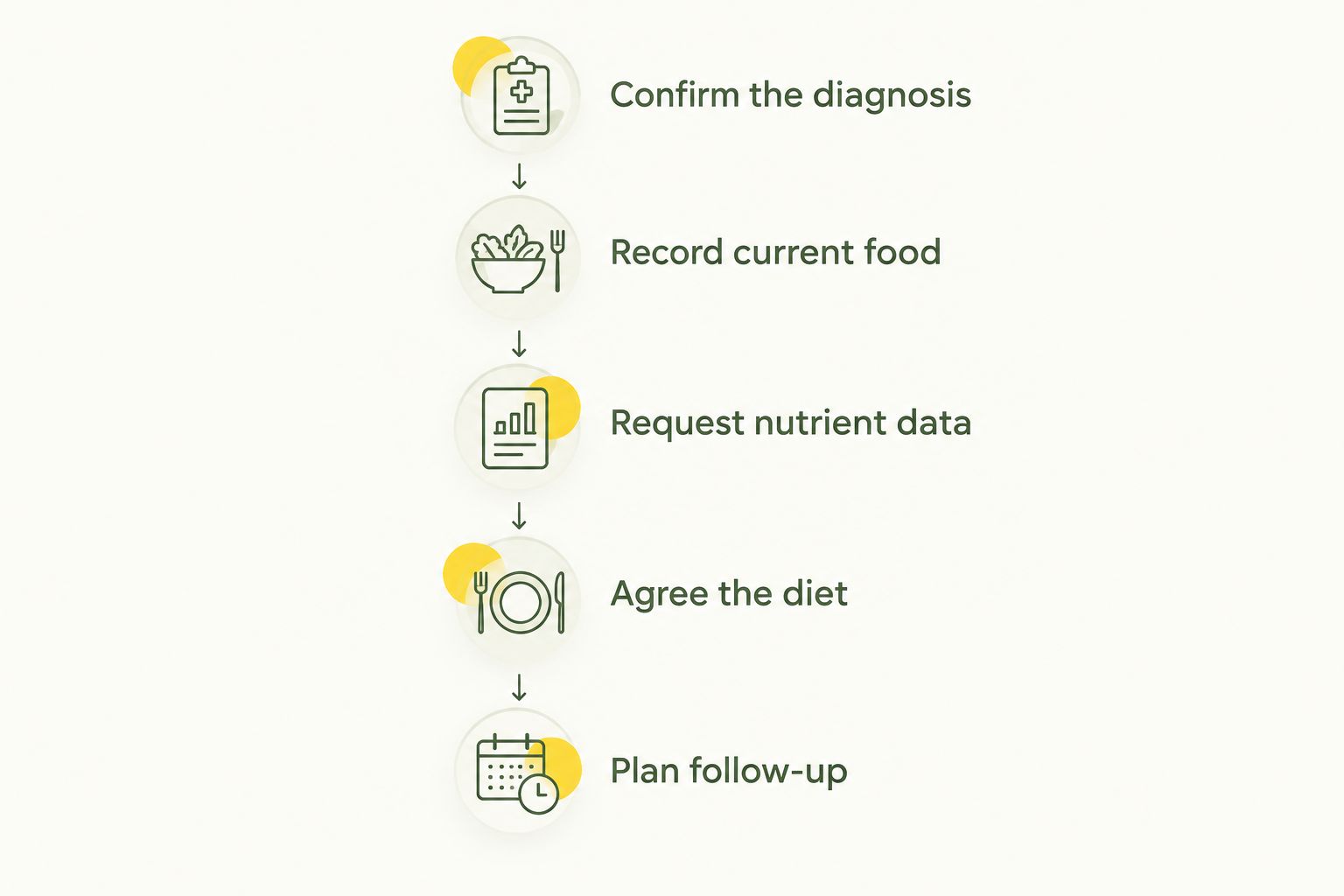
Use this practical checklist for your 2026 appointment:
- Confirm the diagnosis. Ask whether the concern is acute kidney injury, chronic kidney disease or a result needing further investigation.
- Record current food. Bring the exact recipe names, daily amounts and details of treats, chews and supplements.
- Request nutrient data. Ask the manufacturer for the analysis and energy information your vet needs.
- Agree the diet. Discuss a therapeutic renal food or an individually formulated alternative if the usual options are unsuitable.
- Plan follow-up. Agree how to monitor food intake, weight, symptoms and clinical results.
Keep packaging or clear photographs of labels. They are more useful than describing a meal as chicken mince or a mixed raw box.
Ask how to handle the changeover before starting. A dog that feels nauseous or refuses food needs clinical advice, not repeated experiments with new flavours.
Do not cook a bone-containing raw recipe to turn it into a renal meal. Cooking does not correct its nutrient balance, and cooked bones introduce an additional hazard.
What if your dog refuses the renal food?
Contact your vet rather than leaving your dog to go hungry or abandoning the plan. Poor appetite can reflect illness, including nausea, and needs attention in a dog with kidney disease.
Ask whether another therapeutic texture or format is appropriate. A bespoke cooked diet formulated by a veterinary nutrition specialist is another discussion when commercial options do not work.
Avoid adding liver, meat juices, cheese or supplements simply to make meals more tempting. An unapproved topper can change phosphorus or other nutrient intake, even when your dog enjoys it.
Record what your dog accepts and refuses. That gives your vet something practical to work with and helps separate food preference from a wider appetite problem.
Can you mix raw food with a renal diet?
Mixing raw food into a renal diet changes its nutritional profile. The resulting meal is no longer equivalent to feeding the therapeutic food as directed.
Your vet needs to assess the combination and amounts, not just approve each ingredient separately. A general guide to mixing feeding types cannot establish whether a combination suits kidney disease.
If you want to retain familiar food, raise that preference openly. The answer should be a defined plan, not an informal daily addition that gradually replaces the prescribed food.
How should you handle raw food during a diet review?
Until you receive instructions, use careful hygiene whenever handling raw pet food. Wash your hands, clean food-contact surfaces and keep raw food and its utensils separate from food prepared for people.
Freezing does not reliably eliminate all harmful bacteria. A frozen meal is not automatically sterile, and a dog's apparent tolerance does not make kitchen contamination harmless.
Tell your vet if anyone in the household is pregnant, immunocompromised, very young or elderly. Household exposure matters alongside the dog's nutritional needs.
Safe handling reduces exposure; it does not make an unsuitable recipe appropriate for kidney disease. Nutrition and hygiene are separate checks, and both matter.
FAQ
Is raw dog food safe for dogs with kidney disease?
Raw dog food is not a safe default for dogs with kidney disease. Your vet should assess the recipe's nutritional profile and the risks of uncooked feeding before you use it instead of a renal diet.
What's the best food for a dog with chronic kidney disease?
A veterinary therapeutic renal diet is the usual first choice when your vet recommends kidney-specific nutrition. The best individual option must also suit your dog's appetite, nutritional status and other health conditions.
Is raw chicken better than beef for a dog with kidney disease?
Neither raw chicken nor beef is automatically the better kidney-diet choice. The full recipe, nutrient analysis and amount fed matter more than the meat name.
Can a dog with kidney disease eat a complete raw diet?
A complete raw diet is not automatically suitable for kidney disease. General nutritional completeness does not establish the phosphorus control or other adjustments an individual dog needs.
Should I stop all protein if my dog has kidney disease?
No—do not remove protein or sharply restrict it yourself. Your vet should balance your dog's protein needs with kidney management and the need to maintain muscle.
Can I add raw tripe to my dog's renal food?
Do not add raw tripe to a renal diet without veterinary approval. It changes the overall nutrient intake and adds the bacterial risks associated with uncooked food.
When should I call the vet about my dog's appetite?
Contact your vet promptly if a dog with kidney disease stops eating, repeatedly vomits or becomes unusually lethargic. Sudden deterioration, collapse or difficulty passing urine needs urgent veterinary attention.
One last thing
The most useful question for your next food purchase is not whether the recipe sounds natural. It is: does this exact food, in the amount my dog eats, meet the feeding plan?
Raw Direct's raw dog food range gives owners multiple brands to browse, but retail choice is not evidence of renal suitability. For your 2026 feeding plan, get the nutritional specification agreed before choosing a box, flavour or delivery schedule.
Related guides
These explain general feeding topics, not kidney-disease treatment. Use your vet's individual plan whenever general advice differs.