
Raw dog food for dogs recovering from surgery: complete 2026 guide
Dogs recovering from surgery need a feeding plan that supports adequate nutrition without adding avoidable digestive or food-safety risks; raw dog food for dogs after surgery is an option only when your vet agrees it suits the procedure and your dog. This 2026 guide explains how to follow discharge instructions, compare feeding options and decide whether to continue an established raw diet—not start one during recovery.
- Raw dog food for dogs after surgery needs veterinary clearance; discharge instructions take priority over any buying guide.
- Raw Direct suits established raw feeders sourcing familiar complete meals after veterinary clearance.
- Choose complete dog food, not an improvised meat-only recovery diet or extra bones.
- Avoid new proteins, rich toppers and diet experiments while monitoring appetite, drinking and stools.
Why feeding choices matter after surgery
The best post-operative food is the food that fits your vet’s recovery plan. Surgery does not automatically create a reason to switch to raw, increase portions or add supplements. The operation, prescribed medicines and any existing conditions determine what your dog should eat.
Raw Direct sells raw dog food from multiple brands, but a retailer’s range cannot establish whether raw feeding is suitable after a particular operation. Raw meat can carry harmful bacteria, and freezing does not reliably remove that risk. Food handling matters for your household as well as your dog.
For your dog’s 2026 recovery plan, prioritise written instructions over general feeding advice. A familiar diet removes one unnecessary change, but familiarity alone does not make a raw meal appropriate after surgery.
Why a planned diet matters for dogs recovering from surgery
Recovery creates practical constraints that ordinary feeding guides do not address. Your dog might have restrictions on chewing, food texture, meal size or activity. Dental surgery and digestive-tract surgery can require different instructions; neither should be treated as a routine raw-feeding transition.
Reduced activity also makes your usual portion an unreliable starting point without checking. At the same time, adequate nutrition remains important for recovery. Do not cut food simply because walks have stopped, and do not increase it simply because your dog has had surgery. Ask the veterinary team to set the amount.
Your task is straightforward: serve the agreed food, record what your dog actually eats and report problems promptly. A predictable routine makes changes easier to identify than a succession of new flavours and toppers.
How to manage feeding after surgery
Follow your dog’s discharge instructions
Start with the paperwork, not the freezer. Check when food and water can be offered, which diet is required and whether medicines must be given with food. If the instructions are unclear, contact the practice before feeding.
Ask specifically about raw food if your dog already eats it. The veterinary team needs to know the exact product, not just that you feed a raw diet. Give them the label and ingredient information so they can assess it against the procedure and your dog’s medical history.
For a 2026 operation, keep the current instructions somewhere everyone feeding your dog can see them. An old plan from a previous procedure is not a substitute.
- Confirm the first permitted meal and drinking instructions.
- Ask whether the usual raw food should continue or pause.
- Check texture restrictions after mouth or dental surgery.
- Record which medicines need food and which have other instructions.
- Save the practice’s daytime and out-of-hours contact details.
Agree the diet before changing the menu
Use the food already specified by your vet. If no diet is named, ask whether your dog’s usual complete food is suitable rather than choosing a new recovery recipe yourself. A veterinary diet takes priority when prescribed for a particular condition or procedure.
Do not begin a raw transition during immediate surgical recovery. A new diet adds another variable when you need to monitor appetite, vomiting and stools. There is no established reason to expect raw food to heal a surgical wound faster than an appropriate complete alternative.
The same rule applies to flavour changes. A dog refusing food needs assessment against the discharge plan, not an escalating selection of rich meals.
- State the exact food your dog ate before surgery.
- Ask whether that food meets the current feeding requirements.
- Use a prescribed diet when the veterinary team requires it.
- Avoid new proteins and unfamiliar toppers during early recovery.
- Agree when to review the diet as recovery progresses.
Check completeness before choosing a raw meal
Read the packaging yourself first. Look for whether the food is labelled complete or complementary, the intended life stage and the feeding instructions. A list of appealing ingredients is not enough to establish nutritional suitability.
An ingredient ratio such as meat, bone and offal does not by itself prove that a diet supplies every required nutrient. Likewise, plain chicken, tripe or muscle meat is not a complete recovery diet. Use the complete raw dog food guide to understand the buying distinction, then have the specific meal checked against your dog’s instructions.
Raw Direct raw dog food shopping suits established feeders who need a familiar complete meal after veterinary clearance. It does not replace a prescribed therapeutic diet or a veterinary assessment.
- Check the complete or complementary statement on the label.
- Match the food to your dog’s life stage.
- Share the full ingredients and nutritional information with your vet.
- Check any restrictions on fat, ingredients or texture.
- Avoid adding supplements unless the veterinary team directs you.
Set portions and record what your dog eats
Ask for a daily feeding amount suited to the chosen food and your dog’s recovery. Use kitchen scales rather than estimating by eye. Different foods contain different amounts of energy, so the same bowlful is not an interchangeable serving.
Record the amount offered and the amount left. A simple paper log works: note the meal, medicine, drinking, vomiting and stool changes together. This gives the practice useful information if you need advice.
Do not introduce a universal post-operative feeding percentage. Your dog’s body condition, procedure and activity restrictions matter more than a generic raw-feeding formula.
- Obtain the daily amount for the exact food being served.
- Weigh portions in grams with kitchen scales.
- Split meals only as the discharge instructions permit.
- Include any permitted treats in the feeding discussion.
- Record leftovers instead of writing only that your dog ate.
Prepare raw food without cross-contamination
If your vet approves continued raw feeding, maintain careful storage and preparation. Keep your fridge at 5°C or below and your freezer at −18°C or below, following the product’s storage instructions. Thaw food in a covered, leak-proof container in the fridge, away from ready-to-eat human food.
Wash your hands with soap and water for 20 seconds after handling raw food. Clean bowls, utensils and preparation surfaces after use. Freezing is storage, not sterilisation; a frozen raw meal still needs careful handling.
A practical setup separates thawing, portioning and cleaning. Keep the recovering dog’s feeding area accessible without placing raw food near medication preparation or human meals.
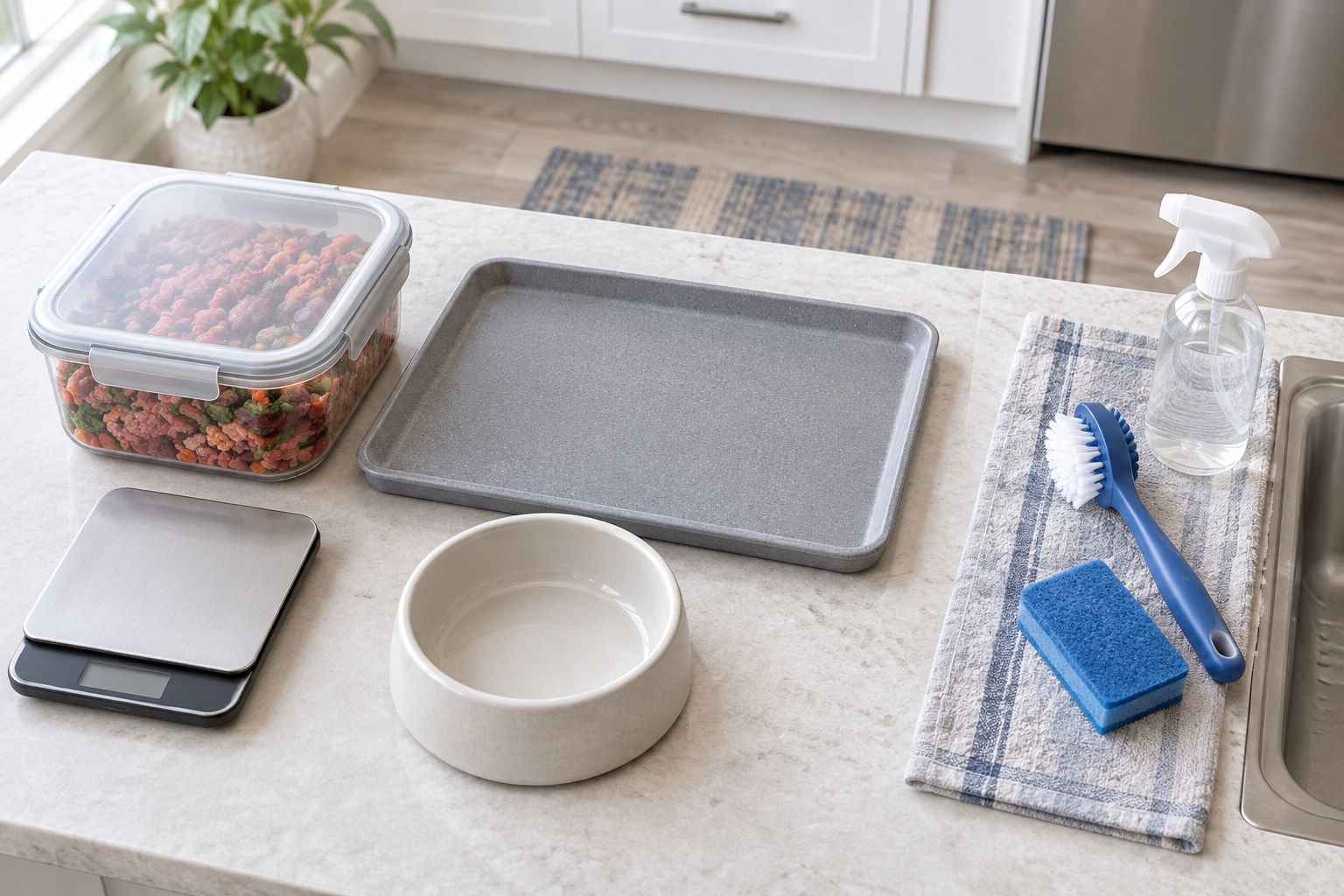
Do not use smell or appearance as proof that raw food is safe. Follow the manufacturer’s handling instructions and discard food that has been stored incorrectly.
- Keep thawing food covered and separated from human food.
- Use clean utensils and a washable preparation surface.
- Wash hands after food handling and bowl cleaning.
- Follow the label’s instructions for thawed food and leftovers.
- Prevent children and other pets from accessing raw meals.
Monitor recovery and contact the practice promptly
Watch the dog, not just the bowl. Appetite is useful information, but it does not establish whether pain control, hydration or recovery is satisfactory. Record changes and use the contact instructions supplied by the practice.
Repeated vomiting, inability to keep water down, marked lethargy, a swollen abdomen or a concerning wound change requires prompt veterinary advice. Difficulty breathing or collapse is an emergency. Do not try a different raw flavour as the response to these signs.
For ongoing appetite concerns, ask the practice when refusal becomes a reason to call; the answer depends on the operation and your dog. Avoid imposing a waiting period from an online guide.
- Note food intake alongside drinking and behaviour.
- Record vomiting, diarrhoea, straining or unusual stools.
- Check the wound as instructed without disturbing it.
- Contact the practice when intake falls outside its guidance.
- Seek urgent help for emergency signs rather than changing food.
Compare feeding options for surgical recovery
For 2026 buying decisions, clinical suitability comes before price or convenience. Compare the options against your discharge plan first. No raw brand wins simply by containing more meat or offering more flavours.
| Option | Best for | Practical advantage | Key limitation |
|---|---|---|---|
| Vet-prescribed recovery or therapeutic diet | Dogs whose veterinary plan requires a specific diet | Matches the feeding approach selected by the veterinary team | Must be used according to the prescription and review plan |
| Familiar complete cooked or dry food | Dogs cleared to continue their established non-raw diet | Avoids introducing an unnecessary diet change | Texture or formulation might not fit the procedure |
| Familiar complete raw food | Established raw-fed dogs with explicit veterinary clearance | Keeps the approved feeding routine consistent | Carries raw-food hygiene risks and is not suitable for every recovery plan |
| Improvised meat-only meals | No routine post-operative feeding recommendation | Ingredients are easy to identify | Not nutritionally complete and not a substitute for the agreed diet |
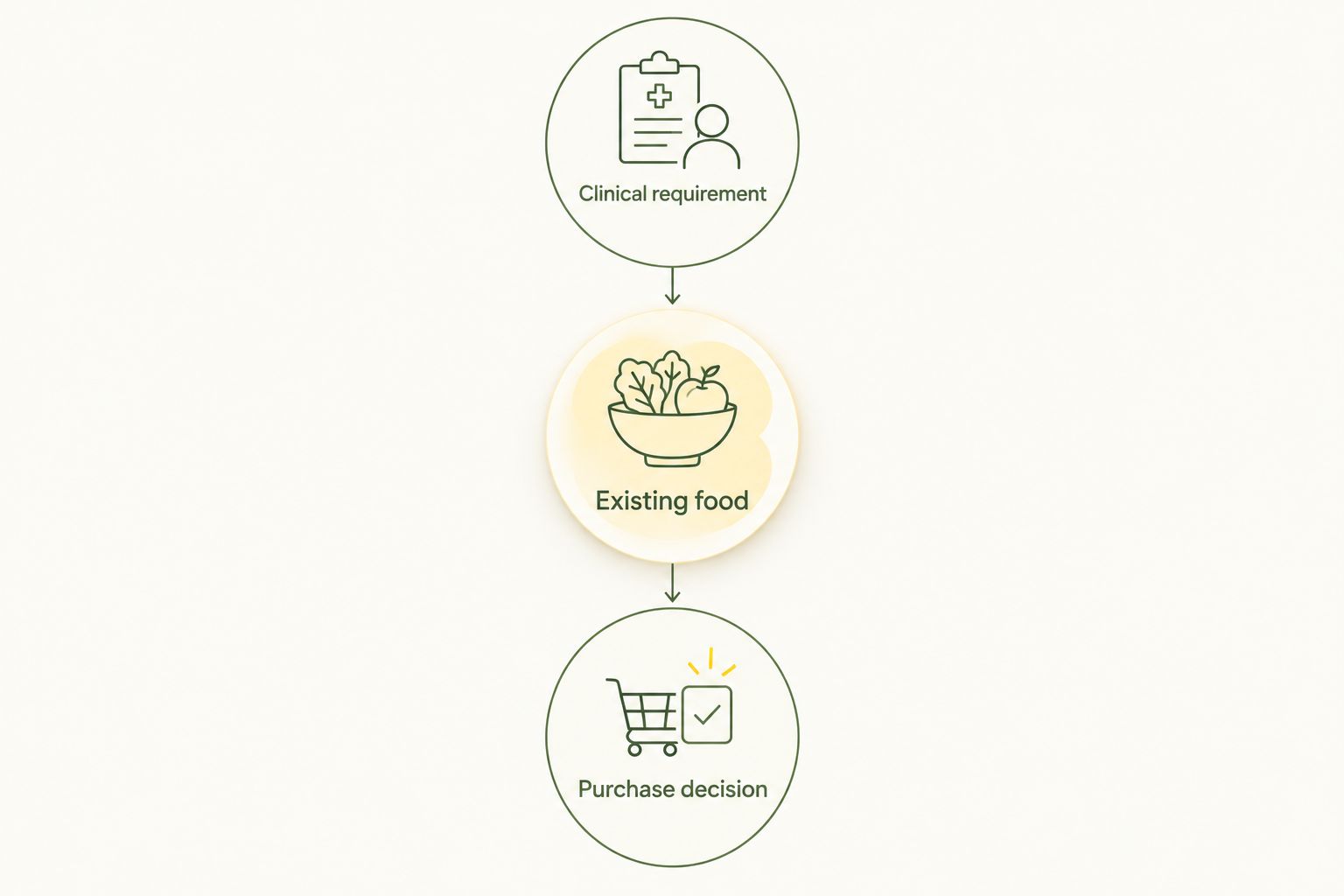
The practical choice follows a short sequence: establish the clinical requirement, check the existing food, then decide whether a purchase is needed. Ordering first reverses that sequence.
Compare familiar raw options only after clearance
Check current pricing and value after confirming suitability. Raw Direct offers free next-day UK delivery, but delivery convenience is not a reason to choose raw food after surgery. Order only when the product fits the agreed plan and you can store it correctly.
The following complete meals are conditional options for established feeders, not recovery treatments. Neither product is presented as healing support, a therapeutic diet or a reason to change protein during recovery.
| Product | Best for | Stated product feature | Honest limitation |
|---|---|---|---|
| Stobart Turkey & Veg | Dogs already eating a turkey-based meal and cleared to continue it | Described as complete (80/10/10), turkey with vegetables | The supplied information does not establish suitability for a surgical diet or a prescribed fat limit |
| Stobart Chicken Complete | Dogs already eating this chicken meal and cleared to continue it | Described as complete, single-protein raw food | Contains chicken and has no supplied surgery-specific suitability evidence |
Choose the familiar approved meal, not whichever description sounds most nourishing. If your dog has never eaten either option, this comparison is not an instruction to introduce it now.


Common feeding mistakes after surgery
- Starting raw to speed healing. Raw feeding has no established surgery-specific advantage that justifies replacing the agreed diet. Keep the veterinary plan in place.
- Assuming soft-looking food suits every operation. Minced food is not automatically appropriate after mouth or digestive surgery. Check the required texture and formulation.
- Offering bones to occupy a resting dog. Chewing adds a separate decision about safety and post-operative restrictions. Ask about suitable enrichment instead.
- Treating food refusal as fussiness. Reduced intake after surgery needs assessment against the discharge instructions. Repeated flavour changes can delay that conversation.
- Adding oils, supplements or rich treats without checking. Extras change the diet and can conflict with feeding restrictions. Clear them with the veterinary team first.
FAQ
Can my dog eat raw dog food after surgery?
Your dog should eat raw food after surgery only if the veterinary team confirms it suits the procedure and recovery plan. Tell the practice the exact product and follow any instructions to pause or replace it.
What is the best raw dog food for dogs after surgery?
There is no single best raw dog food for every dog after surgery. For an established raw-fed dog with veterinary clearance, a familiar complete meal that meets the prescribed requirements is the relevant option.
Should I switch my dog to raw food during recovery?
Do not start a raw transition during immediate surgical recovery. Keep to the agreed diet so you are not introducing a new feeding variable while monitoring appetite and digestion.
Is cooked food better than raw food after an operation?
The better option is the diet your vet selects for the operation and your dog’s condition. Raw food adds handling and bacterial risks, while a familiar cooked diet still needs to meet any texture or nutritional restrictions.
How much should I feed my dog after surgery in 2026?
Feed the amount specified by your veterinary team for the exact food being used. Do not automatically reduce portions because exercise has stopped or increase them because your dog is recovering.
What should I do if my dog will not eat after surgery?
Contact the practice according to its discharge instructions rather than repeatedly changing food. Seek prompt advice if refusal accompanies vomiting, marked lethargy, difficulty drinking or other concerning signs.
Can I cook my dog's raw food to make it safer?
Do not cook a raw product containing bone. Ask your vet to select a suitable cooked alternative rather than improvising with a raw formulation, and check the product instructions before changing how it is served.
One last thing
Your most useful recovery purchase might be nothing at all. If the food already at home meets the veterinary plan, keeping it consistent removes an unnecessary change. Before placing a 2026 order, send the practice a photograph of the label and ask whether that exact food remains suitable.