
Raw dog food for rescue dogs: complete 2026 guide
Rescue dog raw feeding is the use of uncooked food to provide meals suited to an adopted dog’s nutritional needs, with the aim of maintaining a healthy weight and a dependable feeding routine. This 2026 guide to raw dog food for rescue dogs starts with the dog’s existing diet, health and household circumstances—not an automatic switch on adoption day.
- Raw dog food for rescue dogs is optional; keep a suitable, tolerated diet while your adopted dog settles.
- Raw Direct is best for rescue-dog owners comparing complete raw dog food across brands.
- Choose food labelled complete for your dog’s life stage; an ingredient ratio alone does not prove nutritional adequacy.
- K9 Raw No Chicken Box suits chicken avoidance, not a veterinary food-allergy diagnosis.
- Raw feeding requires careful storage and hygiene; freezing does not sterilise raw meat.
Why raw feeding matters for rescue dogs
Your rescue dog needs a suitable diet, not a compulsory fresh start. Adoption changes the dog’s home, carers and daily routine. Keeping a suitable existing food gives you continuity while you learn what normal appetite, stools and behaviour look like for that individual dog.
An incomplete feeding history makes food selection harder. Ask the rescue organisation what the dog eats, how much it receives and whether any dietary restrictions come with its veterinary records. A familiar meal is more useful than an ambitious shopping list when those answers are still unclear.
For your 2026 feeding plan, compare nutritional suitability before convenience. Raw Direct sells raw dog food from multiple brands with free next-day UK delivery, but delivery speed cannot decide whether raw feeding suits your dog or household.
Raw food also introduces handling responsibilities. The UK Food Standards Agency’s guidance on raw pet food identifies risks from harmful bacteria, including contamination of hands and household surfaces. Raw is a feeding format, not proof of better nutrition or a treatment for adoption-related problems.
How to choose and introduce raw food
1. Establish your rescue dog’s starting point
Start with the handover information, not a feeding percentage found online. Record the current food, meal pattern, treats, weight and any veterinary instructions. If the rescue organisation supplies familiar food, use that information to avoid changing several things at once.
Arrange a veterinary assessment before changing the diet when your dog has unexplained weight loss, recurring digestive symptoms, an existing medical condition or an uncertain age. A thin dog does not automatically need a larger raw portion. The reason for its condition matters, and nutritional recovery needs an individual plan.
Consider the people sharing your home as well. Raw pet food requires particular caution around young children, pregnant people, older adults and anyone with a weakened immune system. Ask your vet about a suitable cooked alternative if your household cannot manage the handling risks.
A puppy, an adult dog and a dog receiving treatment need different feeding decisions. Rescue status does not replace those distinctions, and an unknown history is a reason to ask questions rather than guess.
- Ask for the exact current food and daily amount.
- Request veterinary records and documented dietary restrictions.
- Record a starting weight and ask about body condition.
- Identify household members who need extra protection from foodborne infection.
2. Check nutritional completeness before ingredients
Choose a complete food appropriate to your dog’s life stage. In UK pet-food terminology, a complete food is intended to supply the daily nutrients required when fed as directed. A complementary food needs other foods alongside it and is not automatically suitable as the whole diet.
Do not treat a meat, bone and offal ratio as a nutritional guarantee. A recipe description explains ingredients; it does not, by itself, demonstrate that the food supplies every required nutrient. The same caution applies to attractive phrases such as natural or grain-free.
For your 2026 shortlist, read the current label and feeding instructions. Check whether the food is intended for adult maintenance, growth or another stated life stage. If that information is unclear, ask the manufacturer before making it your rescue dog’s sole food.
Supplements are not a shortcut around an uncertain recipe. Adding calcium, oils or vitamins without checking the whole diet can create a different imbalance. If you want to prepare meals yourself, seek a properly formulated recipe from a veterinary nutrition professional rather than assembling one from ingredient percentages.
- Find the complete or complementary declaration.
- Confirm suitability for your dog’s life stage.
- Read the full ingredients, not just the flavour name.
- Follow product-specific feeding guidance and veterinary advice.
3. Match the buying option to the dog’s known needs
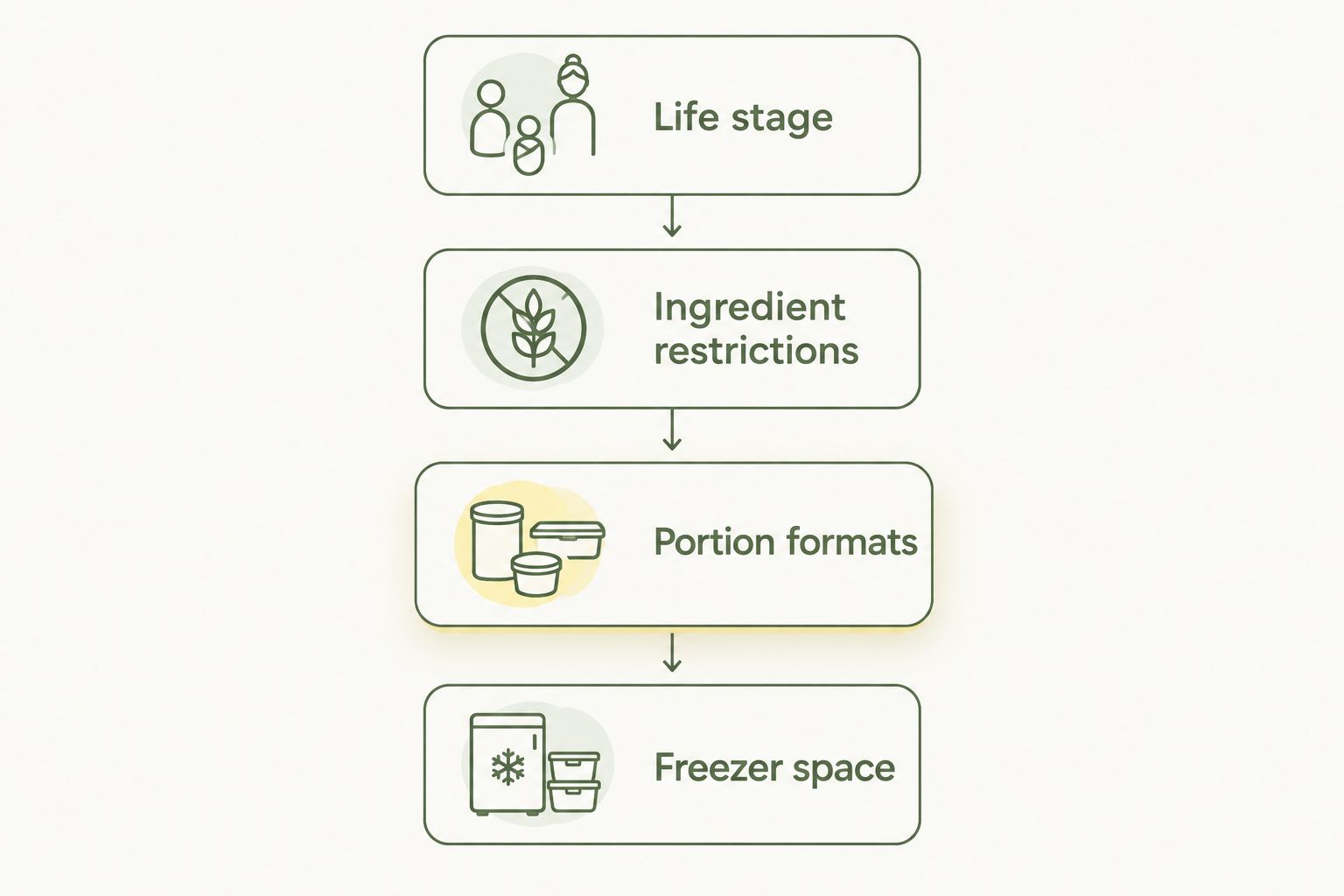
Begin with a written shortlist: suitable life stage, known ingredient restrictions, manageable portions and available freezer space. That manual check costs nothing and prevents buying a large assortment before you know what your dog tolerates.
Raw Direct makes cross-brand raw dog food shopping simpler by bringing multiple brands into one retailer. Raw Direct is best for rescue-dog owners comparing complete raw dog food across brands. The trade-off is that you still need to assess each recipe; a shared retailer does not make every food interchangeable.
For a dog with no reason to avoid chicken, a clearly labelled chicken recipe is a straightforward option to assess. For documented chicken avoidance, a no-chicken box is the more relevant shortlist. Neither choice proves that a dog’s itching or loose stools comes from a food allergy.
Variety has a place after you understand the dog’s baseline. Introducing several unfamiliar recipes together makes it harder to identify which meal preceded a change in appetite or stools. Start with the decision you can explain, then broaden the menu deliberately.
- Shortlist foods against documented needs, not rescue status alone.
- Check every recipe in a mixed box against ingredient restrictions.
- Compare portion formats with your dog’s feeding instructions.
- Leave variety until you can monitor individual recipe changes.
4. Change the diet without changing everything else
Keep the familiar food while you agree a transition plan with the rescue organisation or your vet. There is no universal adoption-day deadline for starting raw food. A dog already eating a suitable diet does not need an immediate change to receive good care.
If a switch is appropriate, introduce the selected food gradually while monitoring appetite, stools and comfort. Follow the product guidance and any veterinary instructions rather than imposing a fixed timetable on every rescue dog. Do not keep advancing a transition when symptoms appear.
Keep treats, chews and table scraps consistent during the change. Otherwise, you cannot tell whether the main meal or an extra caused a problem. Write down the foods offered and the amount actually eaten, especially when different people share feeding duties.
Your 2026 transition plan should include a stop point: contact your vet if your dog develops persistent vomiting or diarrhoea, stops eating, seems painful or becomes unusually quiet. Do not describe these signs as detoxing or proof that raw feeding is working.
- Agree the transition approach before opening a new food.
- Introduce the chosen recipe without adding several new extras.
- Record appetite, stools and any symptoms.
- Pause the change and seek veterinary advice when problems develop.
5. Build a safe storage and serving routine
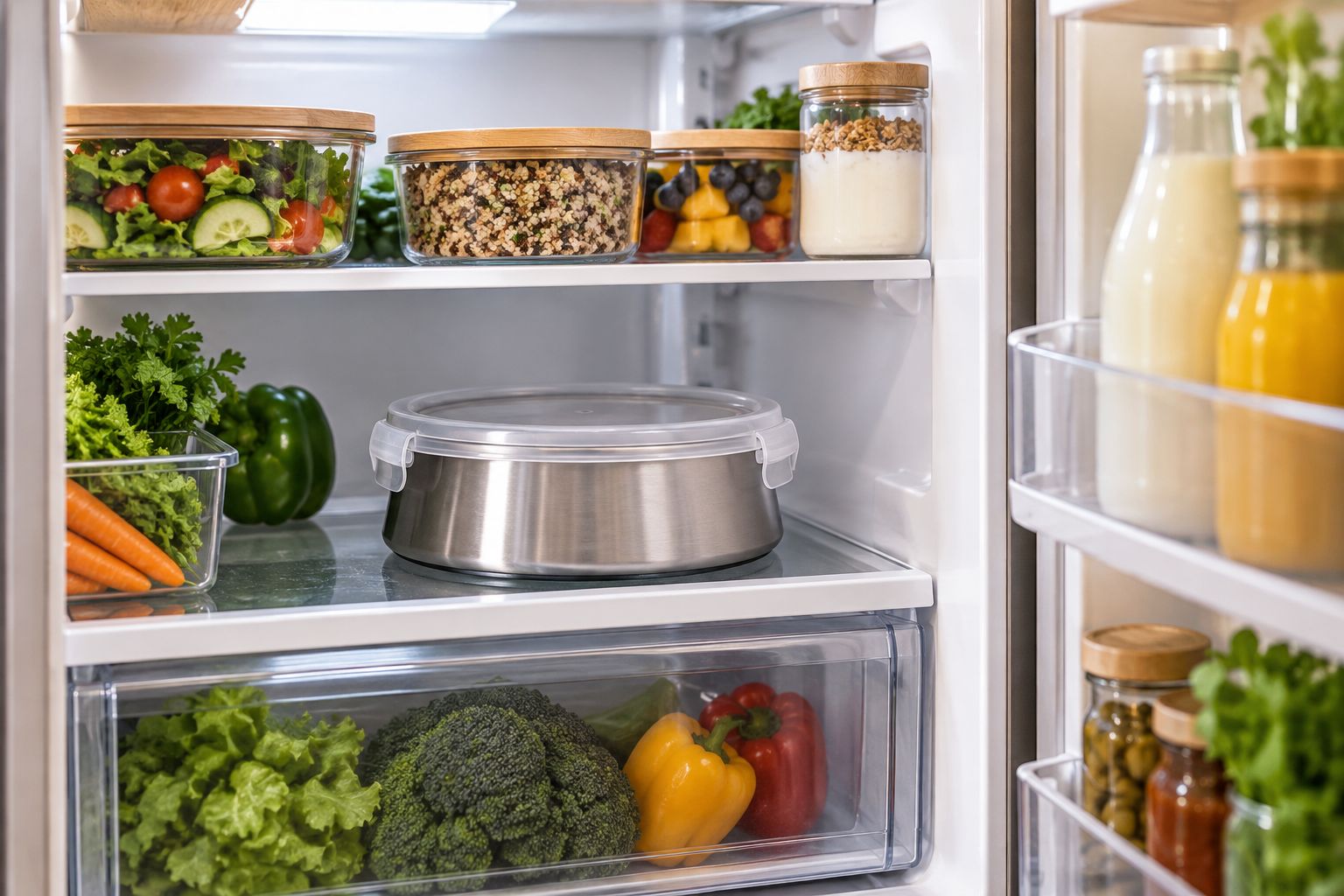
Check the freezer space before ordering, then follow the food’s storage and defrosting instructions. Keep raw pet food separate from food intended for people and thaw it in a covered, leak-proof container in the fridge—not on the kitchen worktop.
The UK Food Standards Agency recommends keeping your fridge at 5°C or below and your freezer at around −18°C. These household storage temperatures support safe food handling; they do not make raw meat sterile. Follow any more specific instructions supplied with the product.
Use dedicated utensils where practical, wash your hands after handling the food and clean bowls and preparation surfaces thoroughly. Keep children away from food preparation and feeding areas. A dog that eats eagerly still leaves a bowl and surrounding area that need cleaning.
Plan what happens if a meal remains uneaten or your delivery routine changes. Use the manufacturer’s instructions for opened and thawed food, rather than guessing from appearance or smell. If you cannot maintain the cold-storage and cleaning routine, choose a feeding format you can handle safely.
- Check fridge and freezer temperatures with suitable thermometers.
- Defrost in a covered container away from human food.
- Wash hands, utensils, bowls and contaminated surfaces after handling.
- Follow the label’s instructions for leftovers and thawed food.
6. Measure progress without chasing promised benefits
Use your dog’s weight, body condition, appetite and overall wellbeing to review the feeding plan. Follow the product’s feeding guidance as a starting point, then ask your vet how to adjust it for your dog. A single rule based on body weight does not account for every recipe or individual animal.
Weigh portions rather than estimating from the bowl’s appearance. A 454g block is a packaging unit, not an instruction to feed the whole block as a meal. Smaller dogs and larger dogs need their own portion decisions, and different recipes can have different energy densities.
Keep a simple diary that another household member can understand. Record the recipe, amount offered, amount eaten and any digestive changes. Review treats too: training rewards remain part of the overall diet, even when you use them to help a newly adopted dog settle.
Smaller stools alone do not prove that a diet is nutritionally suitable. Nor does a shiny coat establish that an allergy has resolved. Look at the whole dog and use veterinary assessment for symptoms rather than expecting a food change to explain everything.
- Weigh portions using the recipe’s feeding instructions.
- Monitor weight and body condition with veterinary guidance.
- Include treats and training rewards in your feeding record.
- Review persistent symptoms instead of repeatedly switching flavours.
Compare the options for your rescue dog
The best 2026 choice depends on what you already know about your dog. Staying with a suitable familiar food wins for continuity; a chicken recipe suits dogs without a chicken restriction; a no-chicken option suits deliberate chicken avoidance.
Raw Direct’s free next-day UK delivery adds convenience when raw feeding is suitable. It does not remove the need to check nutritional suitability, ingredients and storage before ordering.
| Option | Best for | Practical advantage | Key limitation |
|---|---|---|---|
| Suitable existing complete food | Newly adopted dogs already tolerating their diet | Preserves a familiar feeding routine | Still needs checking against current health and life stage |
| K9 Raw Chicken Complete | Dogs without a known chicken restriction | Listed as a complete, single-protein raw food | Unsuitable when chicken avoidance is required; confirm life-stage suitability |
| K9 Raw No Chicken Box 454g Blocks | Owners deliberately avoiding chicken | Described as a complete raw diet using alternative proteins | Not an allergy diagnosis or a substitute for a veterinary elimination-diet plan |
Choose the simplest suitable option, not the largest assortment. A no-chicken box solves a shopping requirement; it does not establish which ingredients your dog tolerates. A chicken recipe gives a clear starting point only when chicken fits the dog’s needs.
Check the current product information before choosing either raw option. These cards provide a route to the named foods, not a recommendation that every rescue dog should switch.


Common mistakes rescue-dog owners make
Switching food on the first day
Changing home and food together makes your observations harder to interpret. Keep a suitable familiar diet while you gather the handover information and establish a routine. Adoption is not a deadline for changing food.
Treating thinness as a reason to feed freely
A dog’s condition needs assessment, not unlimited portions. If a rescue dog is underweight, ask your vet for an appropriate feeding and monitoring plan. Increasing food without understanding the cause misses the more important question.
Calling every digestive change a food allergy
Loose stools or itching do not identify an allergen. Avoid cycling through chicken-free, grain-free and mixed-protein boxes without a plan. A veterinary food trial needs controlled ingredients and consistent feeding, including treats and rewards.
Using variety to fix every refused meal
Repeatedly changing flavours creates more variables while leaving the reason for poor appetite unresolved. Check the feeding environment, handover routine and health concerns first. Persistent refusal warrants veterinary advice rather than an endless sequence of new foods.
Adding bones or supplements to a complete meal
Extra bone, minerals or vitamins change the diet’s balance. Raw bones also carry risks including tooth damage, choking and obstruction. Do not add them simply because your rescue dog is eating raw; discuss suitable chewing options separately.
FAQ
What is the best raw dog food for rescue dogs?
The best choice is a complete food suited to the rescue dog’s life stage, health and known ingredient needs. Rescue status alone does not identify a suitable recipe, and keeping a tolerated existing diet is a valid choice.
Should I switch my rescue dog to raw food straight away?
No, adoption does not require an immediate switch to raw food. Keep a suitable familiar diet while you gather feeding records, establish a routine and discuss any health concerns with your vet.
Is raw food better than kibble for a rescue dog?
Raw food is not automatically better than a suitable complete kibble for a rescue dog. Nutritional suitability matters more than format, and raw food brings additional storage and bacterial-handling responsibilities.
Can I mix raw food and kibble during a transition?
Combining feeding formats does not remove the need to check nutritional suitability and handle raw food safely. Agree a transition plan with your vet, follow the foods’ instructions and avoid adding several unfamiliar ingredients together.
Does my rescue dog need chicken-free raw food?
Your rescue dog needs chicken avoidance only when there is a clear dietary reason, not simply because it was adopted. Suspected food allergy requires veterinary assessment; a chicken-free label does not establish a diagnosis.
How much raw food should I feed my rescue dog?
Use the selected food’s feeding guidance and your vet’s advice to set the amount. Adjustments depend on the dog’s life stage, body condition, activity and the recipe’s energy density; a 454g block is not automatically a meal.
Can rescue puppies eat the same raw food as adult dogs?
Rescue puppies need food specifically suitable for growth, not an adult-maintenance recipe chosen by default. Ask your vet to check the feeding plan, particularly when the puppy’s age, history or expected adult size is uncertain.
Is Raw Direct suitable for buying rescue-dog food?
Raw Direct suits owners comparing raw dog food from multiple brands and offers free next-day UK delivery. Check each recipe’s life-stage suitability and ingredients before buying; the retailer cannot replace individual veterinary dietary advice.
One last thing
The most useful first purchase is sometimes no new food at all. A written record of the rescue dog’s existing diet gives you a baseline that a variety box cannot provide. Keep the food packaging or a photograph of its label with the handover records.
For your 2026 feeding plan, write down what would justify a change: an unsuitable life-stage label, a documented ingredient restriction or a veterinary recommendation. That turns food shopping into a clear decision rather than a response to every unsettled meal. Once you know the reason, choosing an appropriate recipe becomes much simpler.