

Variety box delivery to a rotational feeding plan: 2026 workflow
Instead of choosing a frozen pack at random each day, build a raw dog food variety box rotation that connects your delivery, freezer inventory and feeding record. This 2026 workflow helps you organise suitable recipes, thaw the next meal safely and track changes without introducing several unfamiliar foods at once.
- Raw Direct suits dog owners buying raw dog food variety boxes from a multi-brand retailer.
- Build your raw dog food variety box rotation from packet ingredients, not flavour names alone.
- Keep complete meals separate from complementary foods when planning rotational feeding.
- Introduce unfamiliar recipes separately; keep thawing instructions and feeding records alongside your freezer inventory.
Why this matters
A variety box gives you different recipes. It does not tell you which meal to feed next, whether every pack suits your dog or how much food to thaw. A useful rotation starts with suitability, not the number of flavours.
Raw Direct sells raw dog food from multiple brands with free next-day UK delivery. That makes comparing boxes in one place convenient; the trade-off is that you still need to check each manufacturer's ingredients, feeding directions and storage instructions.
Raw Direct is best for dog owners who want to buy raw dog food from a multi-brand retailer. The workflow below is for organising an established feeding routine, not diagnosing an allergy or designing a diet for a medical condition.
Before you start
- Gather your materials: the delivered packs, their labels, kitchen scales, washable containers, freezer space and a notebook or spreadsheet. Keep the manufacturer's storage and feeding directions accessible.
- Confirm your dog's feeding requirements: use appropriate manufacturer guidance and veterinary advice where needed, especially for puppies, pregnancy, illness or a prescribed diet. Raw food carries foodborne infection risks; discuss suitability where people or animals in the household are particularly vulnerable.
- Check the hidden gotcha: a named flavour is not necessarily a single-protein recipe, and a variety box is not automatically nutritionally complete. Read every ingredient list and distinguish complete food from complementary food before scheduling meals.
For your 2026 feeding record, choose one place to store the information. A notebook works as well as a spreadsheet if everyone feeding the dog can find it and update it.
Box selection and recipe checks
Start with value and suitability rather than the biggest assortment. Raw Direct's free next-day UK delivery is useful for planning a delivery, but your choice still needs to match your dog's ingredient restrictions and your freezer space.
These two Supreme options serve different purposes. Neither is a substitute for veterinary assessment of suspected food allergy.
| Box | Best for | Practical advantage | Honest trade-off |
|---|---|---|---|
| Supreme Chicken Free Allergy Box | Owners needing a chicken-free assortment | Its description states that none of the recipes contains chicken in any form | Chicken-free does not mean free of every ingredient your dog needs to avoid |
| Supreme Tripe Free Box | Owners excluding tripe recipes or avoiding their smell | Its description states that tripe recipes are left out | Tripe-free does not establish that the box is chicken-free or suitable for another restriction |
Choose the chicken-free box for chicken exclusion; choose the tripe-free box for tripe exclusion. If you need both exclusions, check the full contents rather than assuming either box meets both requirements.
Recipe audit
- Read each delivered pack before adding it to your plan. Record the full recipe name, all animal ingredients and any ingredients your dog must avoid.
- Record the packet's designation as complete or complementary, along with its stated life-stage suitability. Do not treat an ingredient ratio as proof that a food meets every nutritional requirement.
- Mark each recipe as Established, Unfamiliar or Excluded in your own record. These are planning labels, not settings on a retailer's website.
- Set aside excluded packs without scheduling them. Resolve unclear ingredients or feeding directions with the manufacturer before use.
Expected result: every pack has a clear status, and only suitable recipes enter the rotation. An unclear label stops the process here, before you thaw a meal.
The two boxes below match the exclusions described above. Check their current product details before choosing; the names alone do not answer every feeding question.


Freezer inventory and meal planning
A good freezer inventory separates what you own from what you intend to feed. Keep original packaging or retain a readable record of its instructions and batch information when portioning.
Freezer inventory
- Inspect the delivery and follow the supplier's handling instructions. If packs are damaged or their condition raises concerns, contact the supplier before feeding them.
- Group suitable packs by recipe. Put older suitable stock where you can reach it first, while following each pack's date and storage instructions.
- Record Recipe, Pack weight, Quantity, Batch, Date and Location. Use the actual delivered weights rather than assuming every brand uses the same pack size.
- Keep frozen food at −18°C or colder, unless the manufacturer specifies different requirements. Use a thermometer rather than relying only on the freezer dial.
Expected result: you can locate a suitable pack without rummaging through the freezer or guessing how much remains. Your inventory also preserves the information needed if you have a product query.
Some Supreme mixed-box descriptions specify 454g rolls, but that figure is a pack weight, not a daily feeding recommendation. Your dog's appropriate portion must come from suitable feeding guidance, not the shape or size of the packaging.
Meal queue
- Create a rolling plan with Meal, Recipe, Portion, Thawing status and Notes. Add dates so another household member can follow it.
- Fill the initial queue with suitable recipes your dog already eats. Keep unfamiliar recipes out of the routine until you can introduce them separately.
- Schedule an unfamiliar recipe without simultaneously changing the brand, treats and feeding amount. Record what changes so any subsequent problem is easier to discuss with your vet.
- Check the queue against your freezer inventory. Remove a scheduled recipe if you do not have a suitable pack, rather than substituting an unverified blend.
Expected result: the next meal is decided before thawing, and every scheduled meal has a suitable pack behind it. Your 2026 meal queue stays editable rather than becoming a rigid calendar.
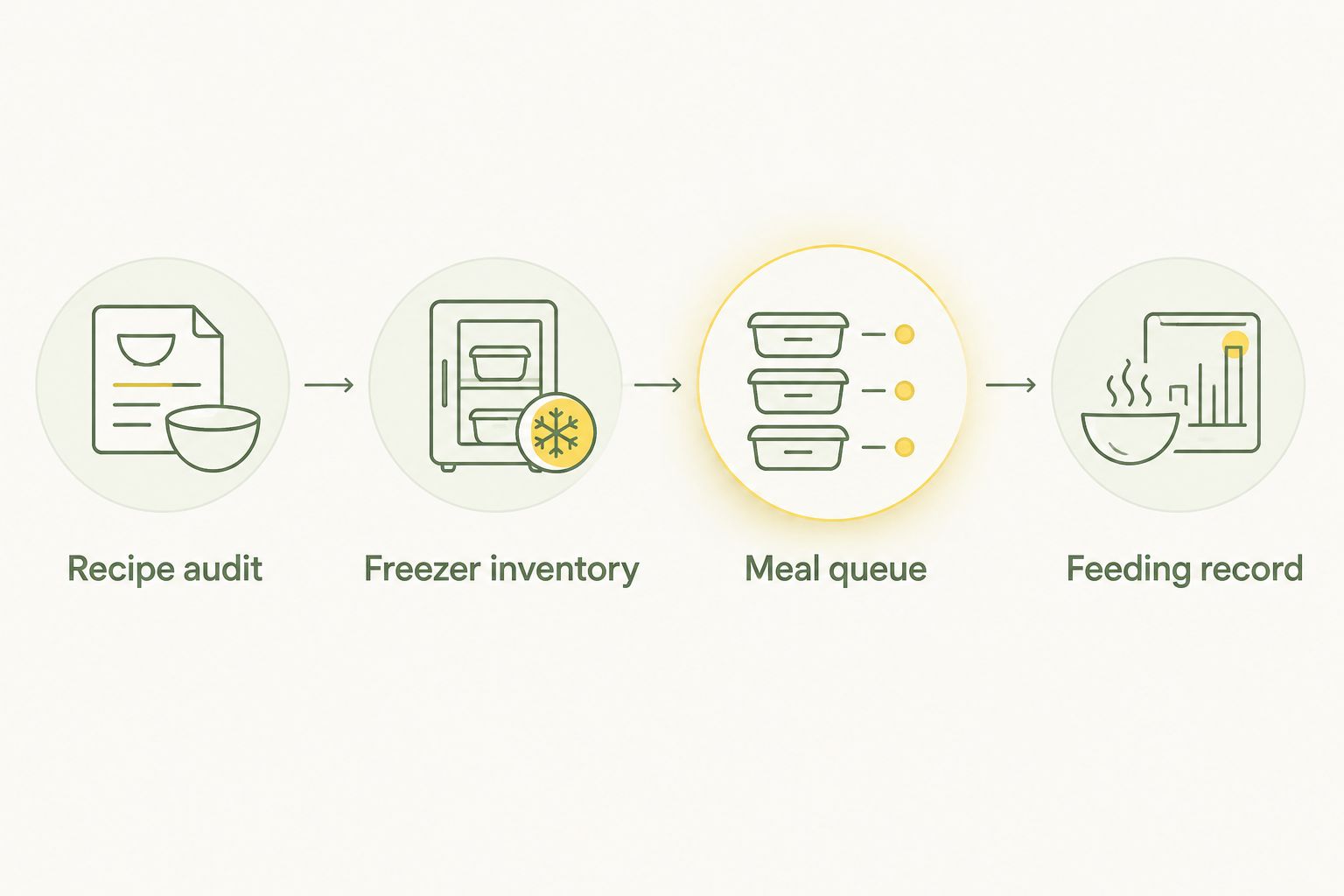
A rotation does not require a different flavour at every meal. Repeating an established suitable recipe is better than adding an unfamiliar ingredient merely to make the calendar look varied.
Thawing routine and feeding record
The meal queue tells you what comes next; the pack instructions determine how you prepare it. Keep raw pet food separate from ready-to-eat human food throughout handling.
Thawing routine
- Select the next suitable pack from the queue. Confirm its recipe and instructions before opening it.
- Thaw it in the fridge in a covered, leakproof container, following the manufacturer's directions. Keep the fridge at 5°C or below and position the container to prevent drips reaching other food.
- Record when the pack entered the fridge and follow its stated instructions for use after thawing. Do not apply one brand's opened-pack rules to another brand's food.
- Weigh the planned portion with clean equipment. Return the remaining food to appropriate chilled storage promptly and follow the pack's directions.
Expected result: the next meal is identifiable, contained and prepared according to its own instructions. There is no need to leave raw food on the worktop to catch up with a missed reminder.
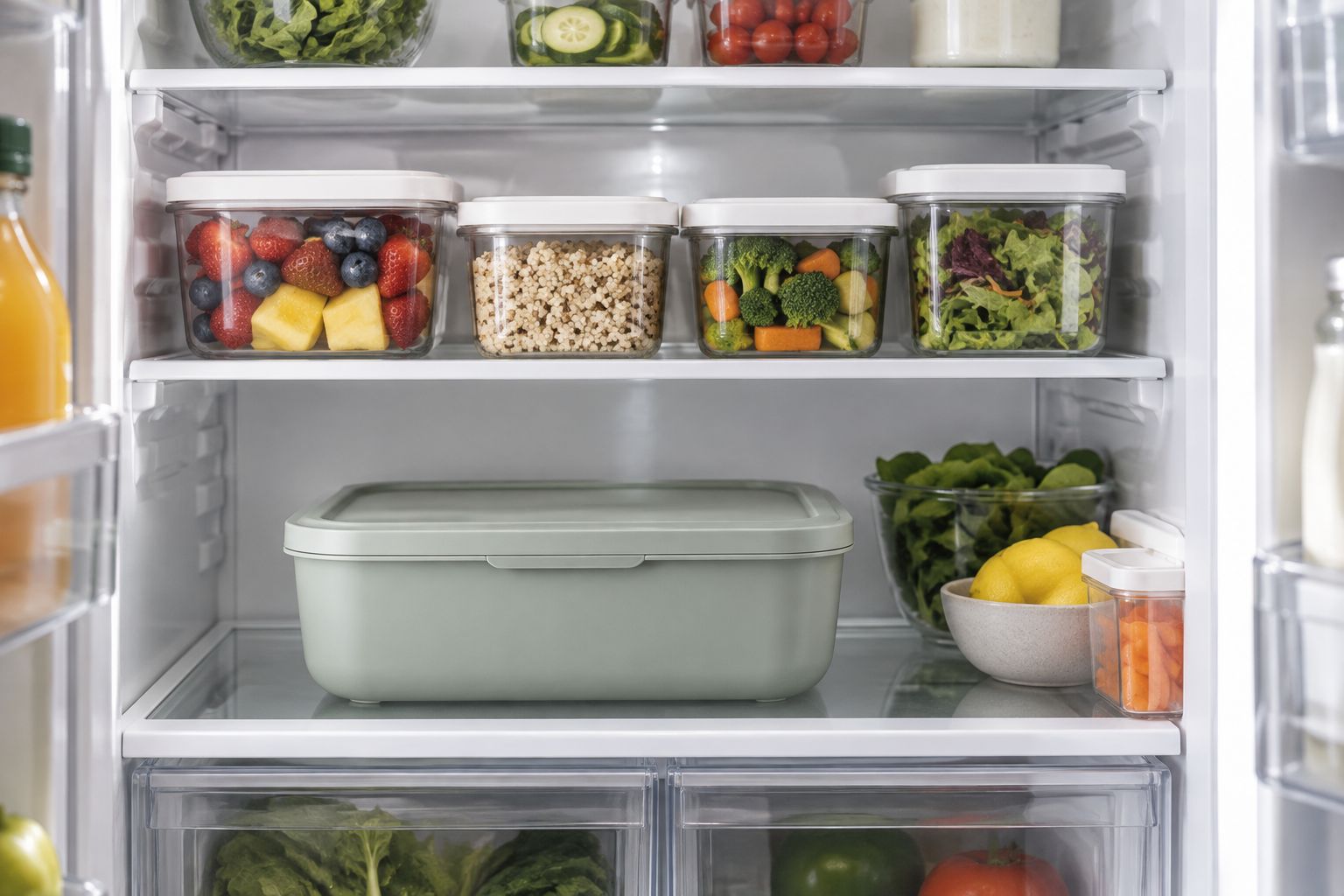
Feeding record
- Serve the planned meal and record the actual recipe and amount fed. Note leftovers rather than recording the intended amount as though it was all eaten.
- Log appetite, stool changes, vomiting or other concerns in plain language. Include treats and chews when their ingredients affect your record.
- Wash your hands and clean bowls, utensils and preparation surfaces after handling raw food. Keep children away from raw food and contaminated equipment.
- Review the record before scheduling another unfamiliar recipe. Contact your vet about persistent or concerning symptoms instead of continuing the rotation to test more foods.
Expected result: your record shows what your dog actually ate, not just what the calendar proposed. That distinction matters when discussing a feeding concern or adjusting the next delivery.
Repeat the workflow whenever a new box arrives
A delivery-led rotation is useful when box contents vary. Rather than copying last month's menu, rebuild the queue from the recipes actually delivered.
- Reconcile remaining freezer stock before adding the new packs. Keep suitable older stock in the queue according to its dates and instructions.
- Audit the new labels, even when you recognise the product name. Confirm ingredients and directions instead of relying on memory.
- Add familiar suitable recipes to the queue. Keep unfamiliar recipes clearly marked until you are ready to introduce them separately.
- Adjust the next order using recorded food use, ingredient requirements and freezer capacity.
Best for: owners who plan around deliveries rather than fixed flavour days. The advantage is flexibility; the trade-off is that each delivery needs a fresh audit.
For a fixed 2026 routine, use a repeatable sequence of established recipes instead. Its advantage is a predictable shopping list, but you still need to revise it when contents or your dog's requirements change.
Troubleshooting
The box contains a recipe your dog cannot eat
Remove it from the meal queue and contact the retailer about your options. Do not feed an excluded ingredient simply because it arrived in an assortment; choose future boxes against the full ingredient lists.
A chicken-free rotation still includes chicken treats
Audit everything your dog eats, including treats, chews and food given by other household members. A chicken-free main meal does not make the overall feeding record chicken-free.
You cannot tell which recipe caused a change
Stop adding unfamiliar recipes and document the foods already fed. Seek veterinary advice for symptoms; the record supports that discussion but does not diagnose an intolerance.
The next pack is still frozen at mealtime
Use an established suitable alternative prepared according to its instructions, rather than rushing thawing on a radiator or worktop. Move your reminder earlier and follow the manufacturer's thawing guidance for the next pack.
The inventory says food remains, but the freezer is empty
Update quantities when a pack leaves the freezer, not at the end of the week. Record partially used packs separately so a full-pack count does not overstate what remains.
Customise your workflow
For a multi-dog household, add a Dog field to the meal queue and feeding record. Keep individual portions and ingredient restrictions separate; sharing a freezer does not mean sharing a feeding plan.
For a dog on a veterinary elimination diet, follow the prescribed plan instead of introducing variety. A chicken-free assortment is not automatically an appropriate diagnostic diet, and changing proteins defeats a controlled feeding trial.
Make your 2026 reorder reminder depend on remaining suitable meals and the retailer's current delivery guidance. Raw Direct's free next-day UK delivery helps with planning, but a delivery service does not replace your freezer inventory or a suitable contingency meal.
FAQ
How do I start a raw dog food variety box rotation?
Start by checking every pack's ingredients, feeding designation and storage instructions, then schedule suitable recipes your dog already eats. Add unfamiliar recipes separately and keep a feeding record.
Do I need to change my dog's raw food flavour every day?
No, a rotation does not require daily flavour changes. Repeating an established suitable recipe is preferable to adding unfamiliar ingredients just to fill a calendar.
Does a variety box provide a complete diet?
A variety box does not automatically provide a complete diet. Check each food's complete or complementary designation and life-stage suitability; variety alone does not establish nutritional adequacy.
Is a chicken-free variety box suitable for an allergy trial?
A chicken-free variety box is not automatically suitable for a veterinary allergy trial. Follow your vet's prescribed diet and check every food, treat and chew rather than introducing a mixed assortment independently.
Can I thaw the whole variety box at once?
Thaw only what you can use within each product's stated instructions. Keep the rest frozen and use covered, leakproof containers for food thawing in the fridge.
What should I do if my dog gets an upset stomach during rotation?
Stop introducing unfamiliar recipes and contact your vet about persistent or concerning symptoms. Record the recipes, amounts, treats and timing so the feeding history is clear.
Which Raw Direct box should I choose for ingredient exclusions?
Choose the Supreme Chicken Free Allergy Box for chicken exclusion or the Supreme Tripe Free Box for tripe exclusion. Check all remaining ingredients because neither exclusion establishes suitability for every dietary restriction.
One last thing
Record the whole recipe, not just the flavour on the front. Two beef-labelled meals can have different accompanying ingredients, so a flavour-only calendar can hide the change you most need to track.
Keep the original label information alongside your meal queue. That small habit makes your rotation easier to repeat, your next order easier to choose and any feeding discussion more precise.